Emberwilde Djinn


A 5/4 flier for four mana was an aggressive rate in 1996, and the upkeep auction is the price you pay for it: at the start of every player's turn (including yours) that player may pay two red mana or two life to seize the Djinn. The clause inverts the usual stability of a creature. Normally a body sits on your side until something kills it; here it walks off on its own, claimed by whoever keeps paying the toll first. There is no penalty for holding it (it is just a clean 5/4 flier), which is exactly why the steal is on the table for everyone each upkeep. The red double-pip in that cost is the structural lock that keeps the design from spiraling: an opponent off red has to bleed two life to grab it, and a mirror of red decks turns the creature into a hot potato passed back and forth, each theft paid for in mana or flesh. The card rewards the player most able to either close the game before the auction grinds on or keep winning the bid when it does. It is a creature you genuinely want to control, and the tension is that everyone else feels the same way and gets a window to act on it. The drawback reads as overcorrection now, a steep tax bolted onto a body that hardly needed one.
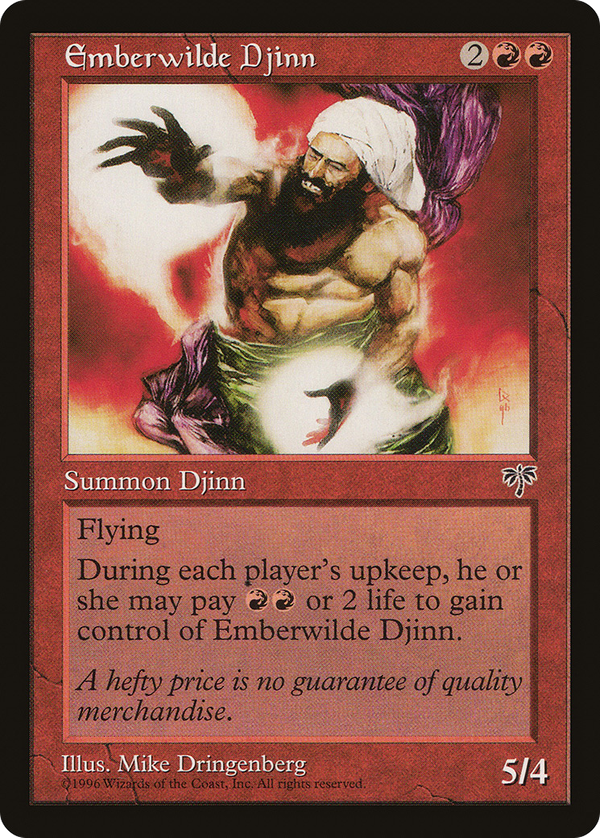
Rules text
or 2 life. If the player does, they gain control of this creature.