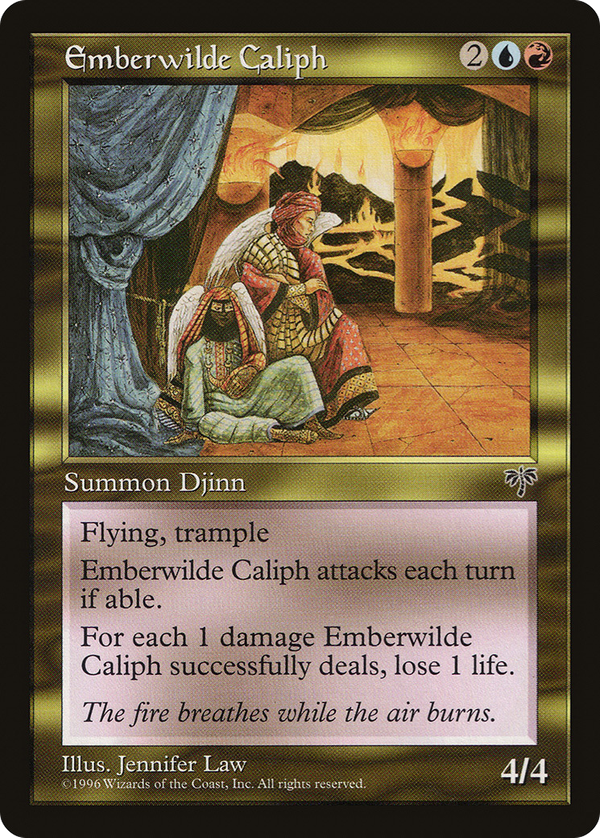
Emberwilde Caliph



The body comes cheap and the oracle text spends the rest of the card paying for it, twice over. The two drawbacks work in opposite directions: the forced-attack clause strips you of the choice to hold the creature back, and the damage-mirrored life loss turns every connection into a wash on your own total. That second clause is the design's real teeth. It does not just tax combat damage; it taxes everything the creature does, so each swing into open air costs you the same four life the body deals while the thing does its job, and any chip damage you take in return widens the gap. The forced attack guarantees you cannot opt out of paying. This is the era's blue-red drawback-creature template at its most punishing: a stat line priced as if it were free, sold to you with a recurring bill that compounds the longer the game runs and the more often the creature connects. The flavor reading is hard to miss, a treacherous genie whose service bleeds the master who commands it, but the mechanical reading is the more honest one. Mirage was built around big, splashy creatures saddled with friction, and this Djinn is the set's clearest statement that a great body and a fragile life total are the same resource viewed from two angles.