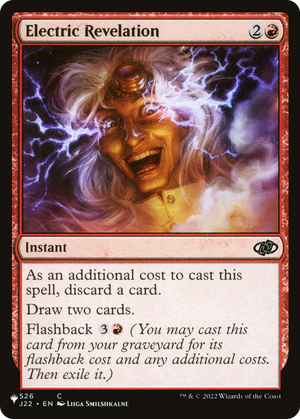
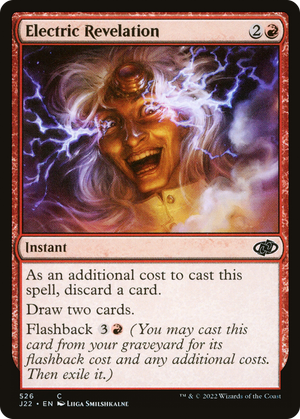
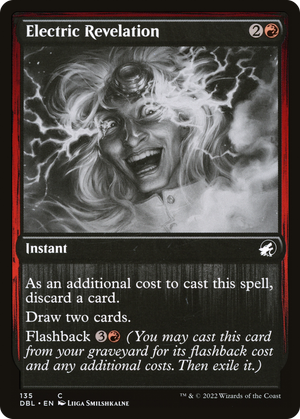
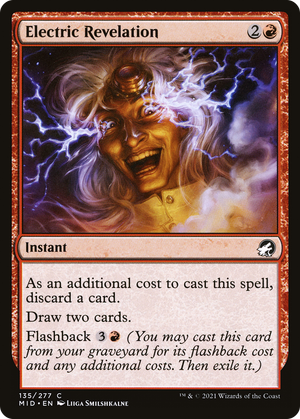
Electric Revelation


Rummaging with a graveyard tax attached. Discard a card, draw two: the exchange is card-neutral (the spell and the pitched card cost you one apiece, against two drawn), so the payoff is not raw advantage but selection, trading a dead card for a live one. This is the old red looting instant handed a second life by flashback, which lets one printing fuel two separate dig sessions spread across a game. The first cast at instant speed fixes a hand mid-combat or refills after a wrath; the graveyard recast means the discard and the smoothed hand were never the full return, because you are buying selection twice, over separate turns, at the price of paying the mana twice. The discard-as-additional-cost clause earns its keep on both ends: it feeds the yard, so the first cast can bin a creature or spell you intend to reanimate or reuse later, and that fuel matters more once flashback comes online. Red's card churn has always arrived with a string attached, whether impulsive exile or loot-and-discard, because the color does not draw cleanly, it filters. The flashback is what lifts the design past a filler cantrip: a deck built to fuel and empty its graveyard gets a spell that pays rent twice.
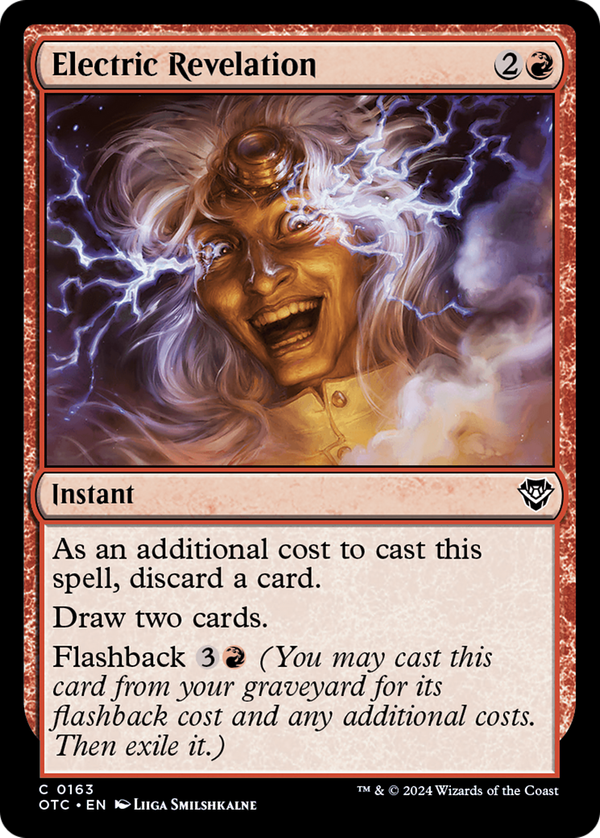
Rules text
 (You may cast this card from your graveyard for its flashback cost and any additional costs. Then exile it.)