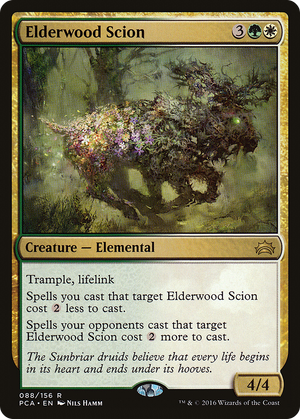
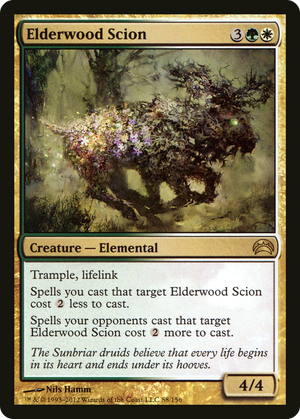
Elderwood Scion



The design conceit here is targeting economics: a creature that manipulates the cost of every spell that points at it, in both directions. Aura and combat-trick decks have always wrestled with the fragility of investment, where a single removal spell blows out the whole board-state and the tempo swing that comes with it. This one changes the arithmetic on both sides of the table. Your own Auras, pump spells, and protection tricks come down two mana cheaper, so the enchant-and-swing plan generates real tempo and mana advantage; meanwhile an opponent's targeted removal costs two more, which is often the difference between a clean answer and a turn they cannot afford to spend answering. The lifelink and trample are the payoff structure: a 4/4 that grows through Auras races well and gains back the life you leaked equipping it, and trample means the chump-block escape hatch closes. What makes the cost tax genuinely load-bearing is that it works on any targeted spell, not just removal, so it also discourages the opponent from sacrificing their own value to steal or bounce it. The card asks you to commit resources to a single creature, historically the losing side of a two-for-one, and rewrites the exchange rate so that commitment pays. It is a voltron enabler that solves voltron's oldest problem by making the target harder to remove and the buffs cheaper to stack.
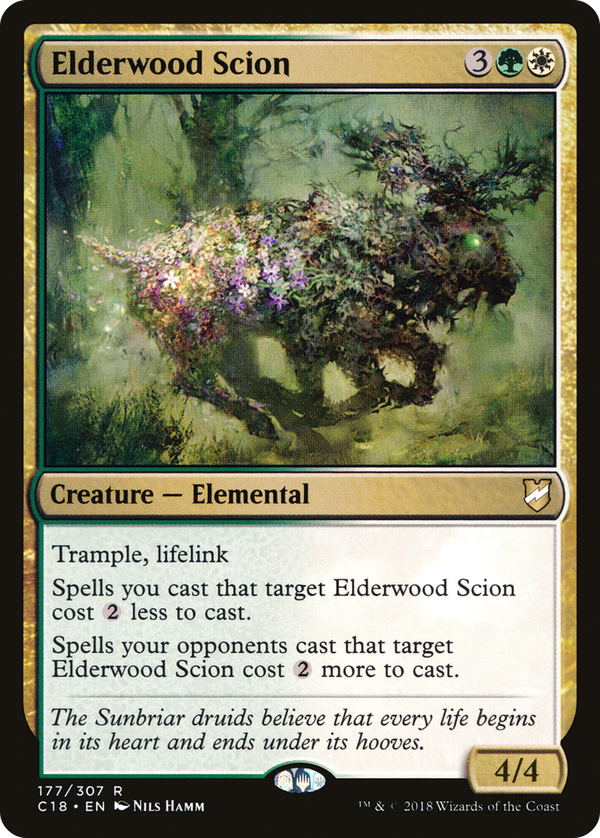
Rules text
 less to cast.
Spells your opponents cast that target this creature cost more to cast.
less to cast.
Spells your opponents cast that target this creature cost more to cast.