Eightfold Maze


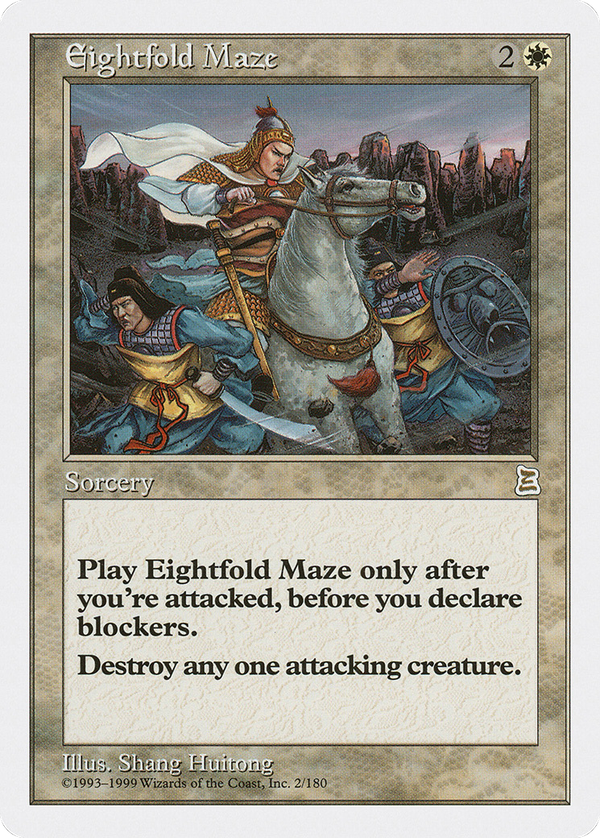
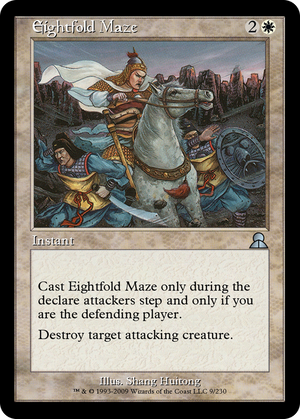
The timing restriction is the entire design: this can only be cast during the declare attackers step, and only after you have actually been attacked. That window collapses removal into a punishment for committing to combat. The attacker has already declared, already lost the option to hold back, and only then does the destruction land. Compare it to ordinary white removal that asks nothing of the timing: this trades flexibility for a discount on the premise that you let the opponent overcommit first. You cannot proactively clear a blocker, cannot kill a creature before it swings, cannot interact with anything that simply sits back; the card is inert against a defensive board. What it buys for that narrowness is a clean, unconditional destroy effect aimed precisely at the thing that is hurting you in the moment it hurts you. The design belongs to an era when conditional removal was priced against the conditions it imposed, and few conditions are as sharp as "I had to be attacked first." It rewards the patient defensive posture and outright refuses to play any other game, which makes it one of the more honest expressions of reactive white: it does exactly one thing, at exactly one moment, and asks you to have built around being on the receiving end of an attack.