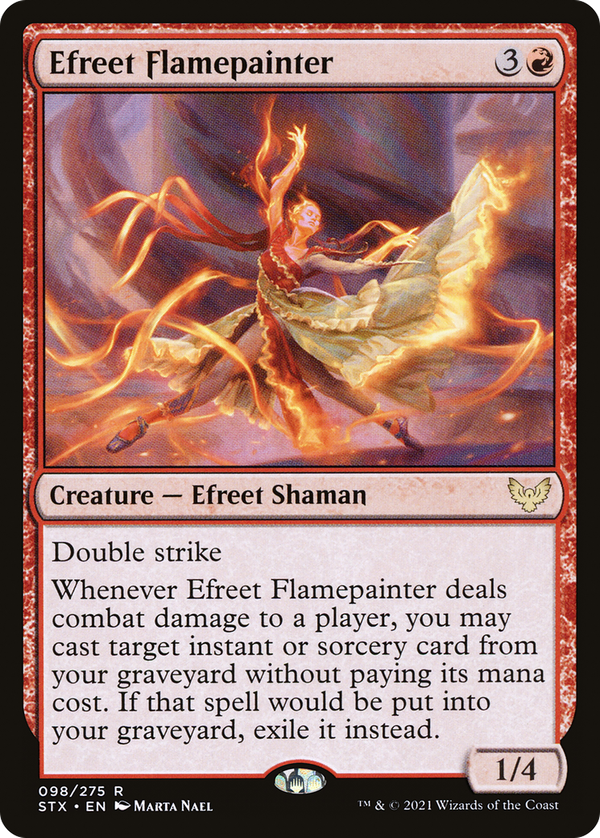
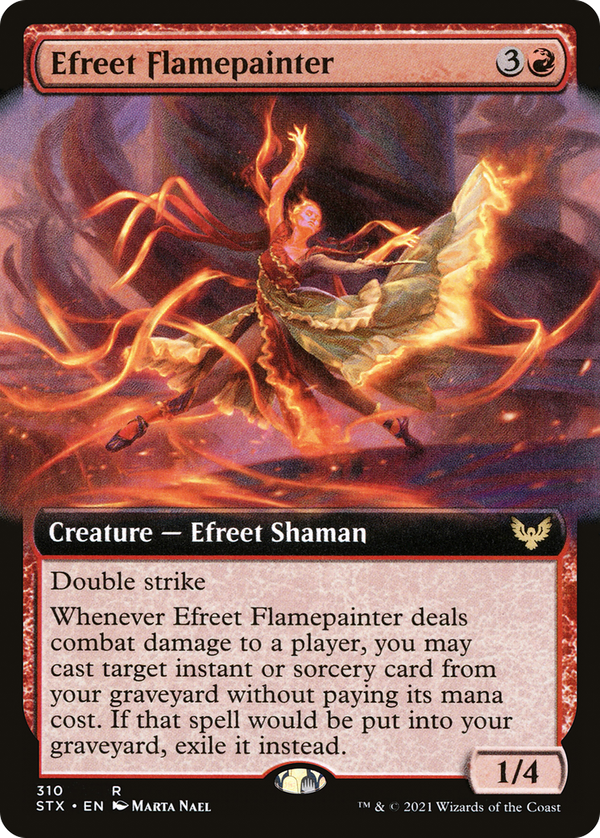
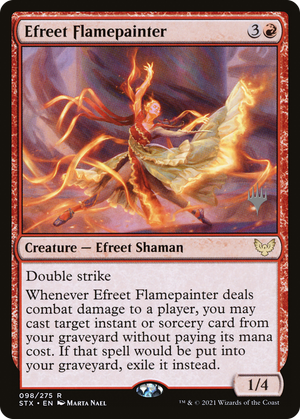
Efreet Flamepainter


The 1/4 body is the real design here, not the double strike. A Shaman that wanted to attack would want power; this one wants to stick, and the wall-adjacent toughness tells you the plan is to connect turn after turn rather than end the game with a single swing. Double strike is the multiplier, but not in the usual sense: because the recast trigger keys off combat damage, an unblocked hit fires the ability twice, first-strike damage and then normal damage each granting a free spell from the graveyard. Two connections is two spells, and the second is often cast off mana the first spell generated or the board the first spell reshaped. The exile clause is the screw that keeps a defenseless opponent from becoming an infinite loop: a recast spell heads to exile rather than the yard, so every card in the graveyard is a one-shot round in a magazine, not a single bomb you fire over and over. That reframes deckbuilding as inventory management. You are not looping one payoff; you are stocking a queue of high-cost instants and sorceries to spend in sequence across successive combats, and the value scales with how unfair the mana costs you skip are. This is a graveyard-recasting engine that rewards filling the yard over the hand, closer to the flashback school than to raw draw, since each card gets exactly one encore before it leaves for good.