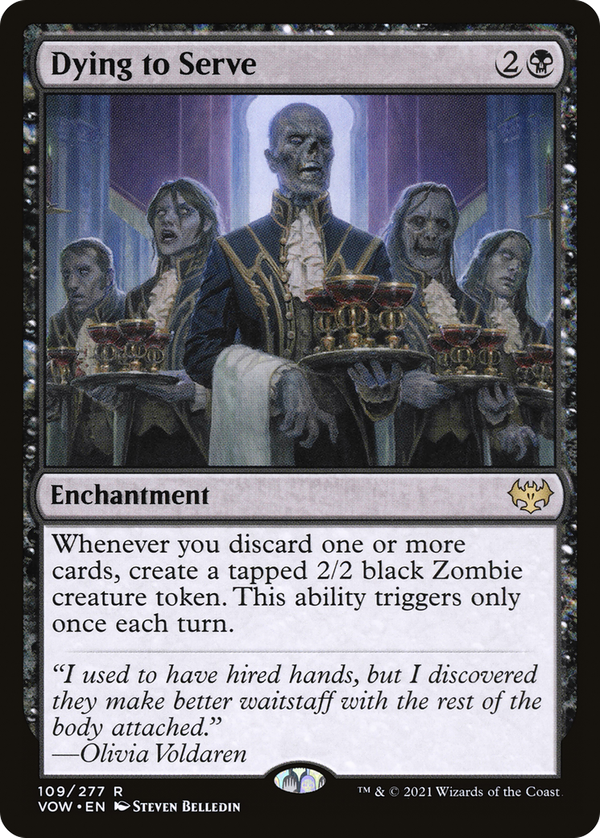
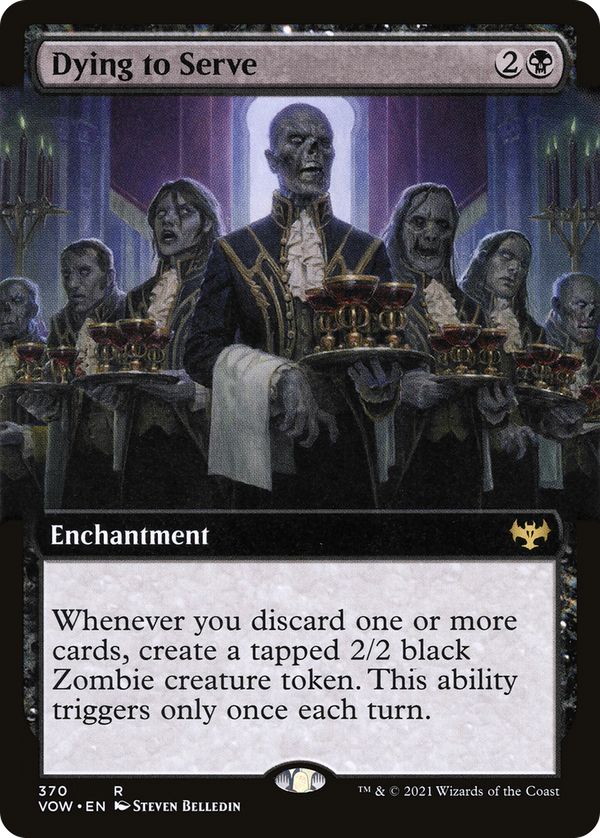
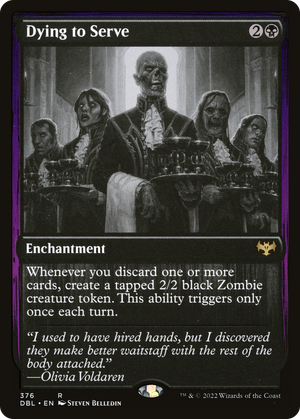
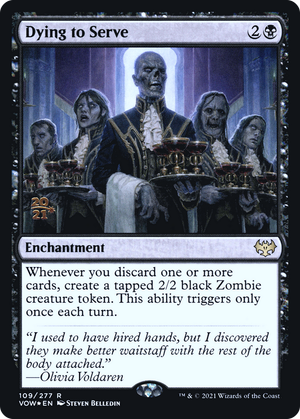
Dying to Serve


Discard has always been treated as a cost to pay, not a resource to mine: you toss cards to power a loot, to enable madness, to dodge hand-size limits, and the discard itself is dead motion. This flips the sign on that motion. Every turn you throw cards away, whether to a rummage effect, a hellbent enabler, or a forced discard from your opponent, a body comes back, and capping the trigger at once per turn stops the payoff from spiraling into a token engine that outruns its own graveyard theme. The tapped Zombies matter to the math: they cannot block or attack the turn they arrive, so this reads as a slow-burn payoff rather than a defensive wall, rewarding a deck that discards repeatedly across many turns rather than dumping its hand in one explosive dig. The design sits in the long lineage of black cards that turn attrition into advantage, but where most of that lineage pays off graveyard count or creatures dying, this one triggers strictly on the act of discarding, which quietly opens a different construction: an engine built to treat emptying your hand as the point, not the price.