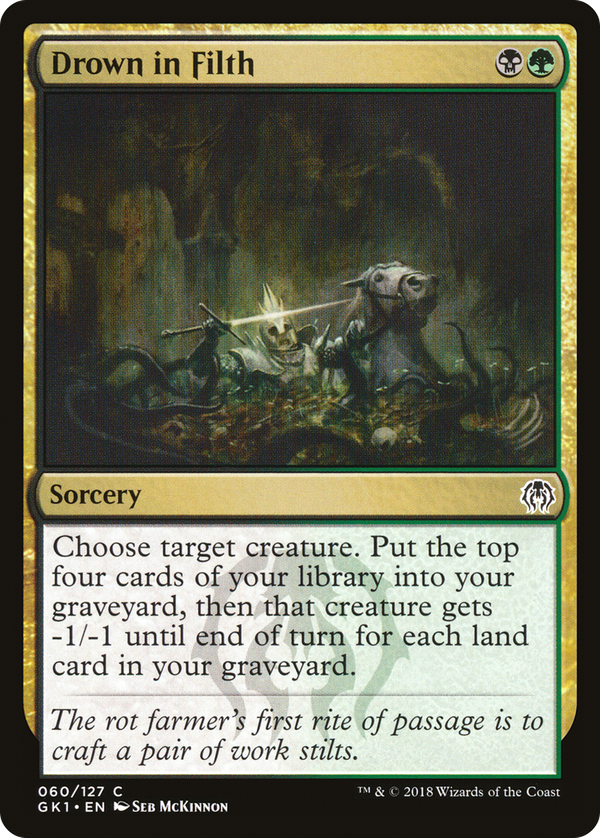
Drown in Filth


The removal here is a fiction; the real card is a self-mill payoff wearing a removal spell's clothing. Mill four off the top, count the land cards already in your own graveyard, and the targeted creature shrinks by that much until end of turn. On its face the math is a coin flip: a freshly milled four might surrender one land or three, and the spell underdelivers on everything it promised when the graveyard is thin. That variance is the entire pitch. Bend your deck toward stocking the graveyard before you cast it and you invert the usual logic of removal: instead of spending a card to clear a threat, you spend a card to cash in work the deck has already done. A loaded graveyard turns a two-mana sorcery into a one-sided answer to the largest creature on the board; a fresh one strands it as a glorified four-card mill. As a piece of the self-mill design school inside black-green, it treats the graveyard as a resource bank rather than a place spells go to die. The lands-only count is what stops it from being a free kill: it forces you to value milling your own lands, the cards a normal deck is happiest to lose, and that inversion is precisely what makes the build worth assembling.