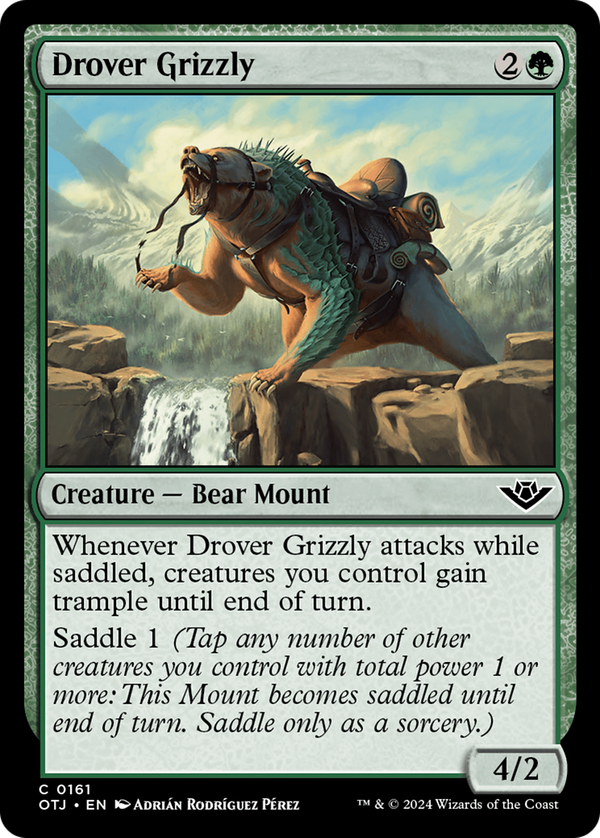
Drover Grizzly


Saddle turns the old aggro tension between board width and reach into a resource question, and this bear answers it by handing the whole crowd the keyword that makes a crowd matter. The 4/2 body wants to swing now, but a two-toughness attacker with no native evasion trades down to any pair of small blockers that gang up on it: on its own, this is a creature the ground stall eats alive. That is the whole point of the trample clause. When it attacks while saddled, every creature you control gains trample until end of turn, so a wide board stops being a pile of chump-blockable bodies and becomes damage that spills through blockers. The sequencing is the part worth reading carefully. You saddle before combat, at sorcery speed, tapping other creatures to pay the cost: those creatures are then tapped and cannot attack this turn. So the payoff belongs not to the ones that paid but to whatever untapped attackers you send in beside the bear, all of them punching through together this same combat. That is the sequencing puzzle: tap the right body to switch the ability on while leaving your best attackers free to swing. Trample is the right keyword to hang here rather than something splashier, because it converts incidental power on a crowded board into damage that ignores walls, which is exactly the problem a go-wide deck otherwise runs into. And because the saddle happens before blocks are declared, the opponent sees the committed board before deciding what to trade: no combat-trick blowout, just the honest arithmetic of a flood that finally gets to reach.