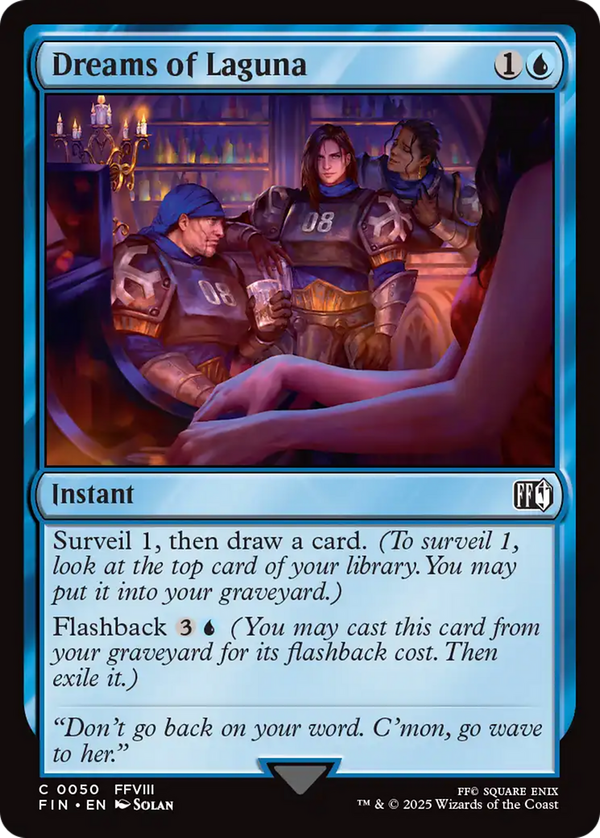
Dreams of Laguna


Two cantrips priced across two points on the curve, with the second cast deliberately more expensive than the first. The upfront half is the cleaner one: filter the top card, replace itself, do the smoothing work a control deck wants at instant speed while it holds interaction open. The flashback is where the accounting gets interesting, because casting it again costs  instead of the you paid the first time. That two-mana premium carries the entire tax. Six mana for two cards is not a bargain; it is a rate you pay in installments, and the installment plan is the point. The first copy fits a cheap window where you're leaving mana open anyway; the second waits for a turn where four mana is spare and you'd otherwise pass empty. There is no built-in delay, so in principle both halves can go off in one turn if the mana is there; the cost lives in the price, not the timing. The flashback clause matters most when the first copy never gets cast under its own power, discarded or milled rather than played: even then it can be flashed back, turning a stranded card into a delayed draw. Surveil-then-draw is a quiet upgrade over raw draw, letting you bin an unwanted land or seed a graveyard payoff before committing to the top card. Nothing here is flashy; it's card advantage engineered to be cast twice, priced so the flexibility never comes free.
Rules text
(You may cast this card from your graveyard for its flashback cost. Then exile it.)