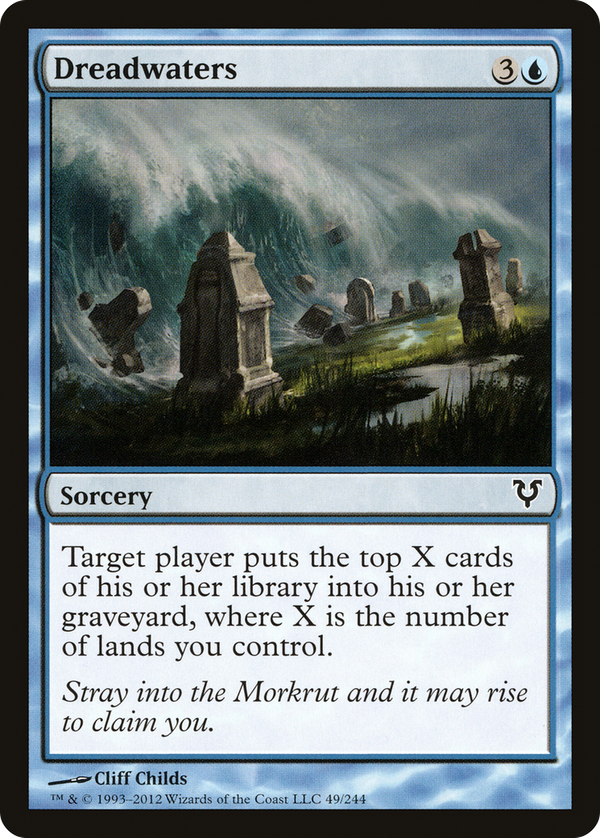
Dreadwaters


The dial here is land drops, which is a strange knob to bolt onto a mill effect. Most mill that scales off your own board reads from creatures or some other accumulating count; this one reads from the number of lands you control, and lands are a resource a control or tempo shell wants spent on threats and answers, not converted into cards off the top of someone else's library. The math is the trap. Hitting four lands by the time you cast it nets a four-mana sorcery that mills four, an effect that touches neither the board nor your life total and offers no early pressure; a mill plan keyed to land drops is a mill plan that cannot close before the game gets long. That is the recurring tension in dedicated mill design: the payoff grows over the course of a game the strategy desperately wants short. The land-count scaling does push toward a slower, land-heavy build where the spell eventually reads for a real chunk, but "eventually" is the whole problem, since by then the libraries it threatens are the ones already half-empty from the grind you have stalled into. Where it sees real consideration, the reason is usually the shallowness of the mill pool rather than a rate that ever justified the slot: a payoff that exists because dedicated mill needs spells to fill out a deck, not because lands-as-mill was ever a strong conversion.