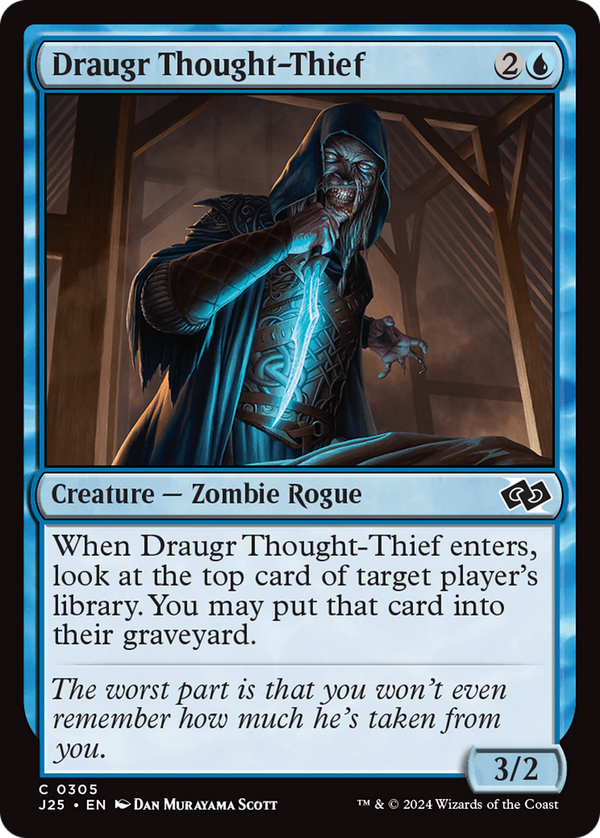
Draugr Thought-Thief


The mill here is almost incidental: a single card off the top with the option to leave it, and that restraint is the point. This is a body with a rider, not a rider with a body, but the body is deliberately understated. A 3/2 for three is under the vanilla curve, and it is supposed to be: the enters-trigger is what you are actually paying for, and the statline is priced to make room for it. The "may" clause is where the flexibility lives. Against a control opponent you can feed their graveyard a card they wanted to draw; against a graveyard-hungry opponent you decline and keep the information instead. It looks at any player's library, including your own, which turns the same trigger into a self-mill enabler or a disruption piece depending on the shell. That optionality is the whole reason a common with such a small effect finds homes outside the tribe it was printed for. The ability is generic enough to fit any Zombie or Rogue deck, cheap enough to be effectively free once the creature is one you wanted anyway, and modal enough that it does something useful across mirror-inverse gameplans. It is the shape of a synergy piece that survives when the synergy dries up: not because the body carries it, but because a look-and-maybe-mill trigger is rarely dead.