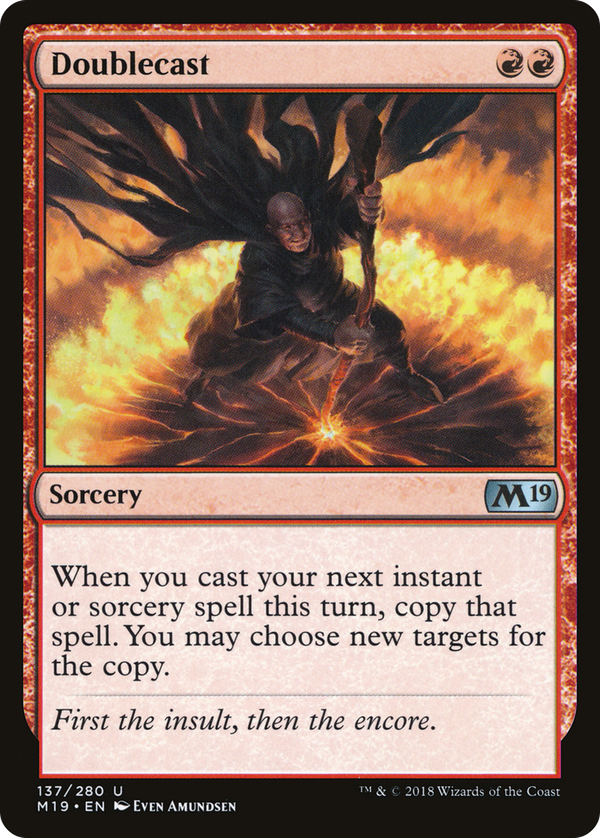
Doublecast

The trigger is the whole hinge, but the way it's built inverts the older way of copying spells. Fork, the ancestor here, copied something already on the stack and made you hold mana for both halves at once, committing to the target before you'd even seen the copy's window. This decouples the copy from the target: you pay first, arm the trigger, then decide what to double as the turn unfolds, whether that's a second burn spell, a second tutor, a doubled ritual, or a second finisher. The constraint that prices this is the "this turn" clause, which forbids arming on one turn and firing later. You need this to resolve and a follow-up spell worth copying inside the same turn cycle, which is why the "two mana up front" framing understates the real cost. What you're buying is sequencing latitude within a single turn, not a cheap copy. And because the copy is created when you cast the next spell, it goes on the stack in its own right: counter the original and the copy still resolves independently, so the effect is sturdier against interaction than its reactive cousins. That's the axis it lives on. Twincast and Reverberate answer the same design question from the reactive side, copying a spell they can already see; this one asks you to commit the copy blind and trust the turn to hand you something worth doubling.