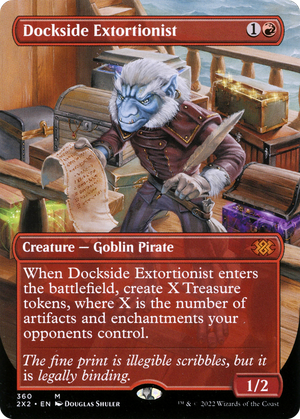
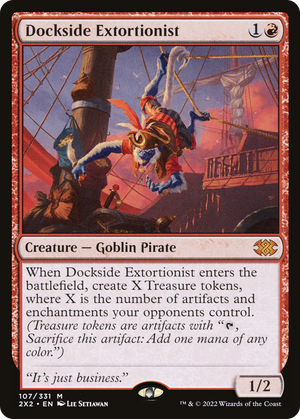
Dockside Extortionist


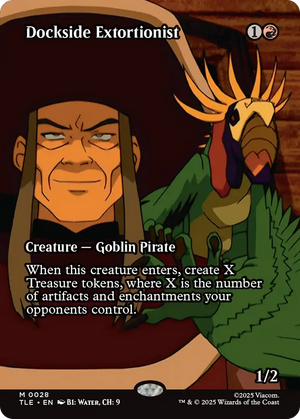
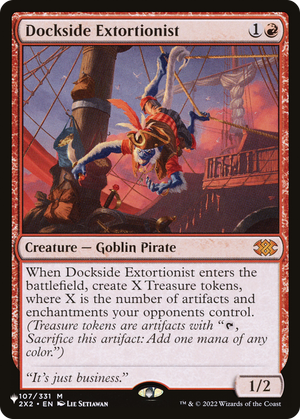
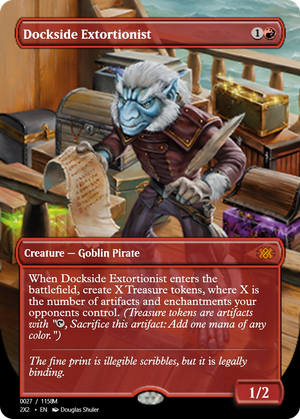
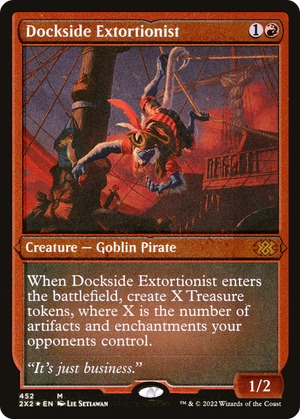
The math is the whole trick: a two-mana creature that reads its ramp off the opposing board rather than its own. Most rituals and rocks pay a fixed rate the moment they resolve, so their ceiling is written into the card. This one leaves the ceiling to the table, and crowded boards spike it: every mana rock, every signet, every enchantment engine, every artifact and enchantment across every opponent counts toward the X. The trigger only cares that the artifact or enchantment type is present, so artifact lands, artifact creatures, and enchantment creatures all feed it too; the count is broader than a quick read of the card suggests. The 1/2 body is beside the point; the entry trigger routinely nets four, five, six Treasure, and Treasure is not just mana. It is artifact fodder, sacrifice payload, and any-color fixing that sits on the battlefield until you need it. A creature that ramps and leaves a pile of sacrificeable artifacts is doing the work of a ritual, a rock, and a combo enabler in a single slot, so a card that scans as filler plays as an engine piece. The design tension is that it was priced against a fair, empty board, but the environments it thrives in never present one; the number after the X is set by a table the designers did not fully control. That gap between the printed rate and the realized rate is the entire card, and it is why a Goblin Pirate with a forgettable stat line became a fixture of the exact decks built to turn one big mana burst into a win.
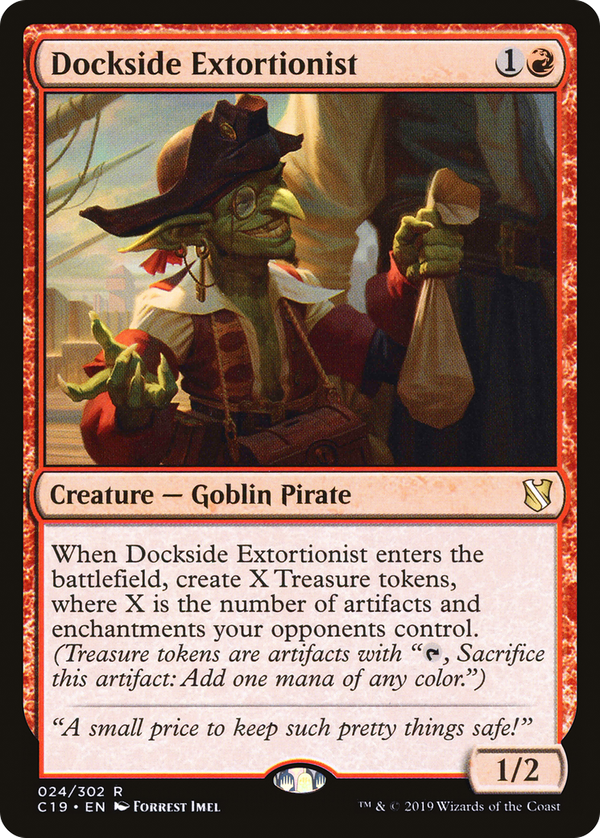
Rules text
 , Sacrifice this token: Add one mana of any color.")