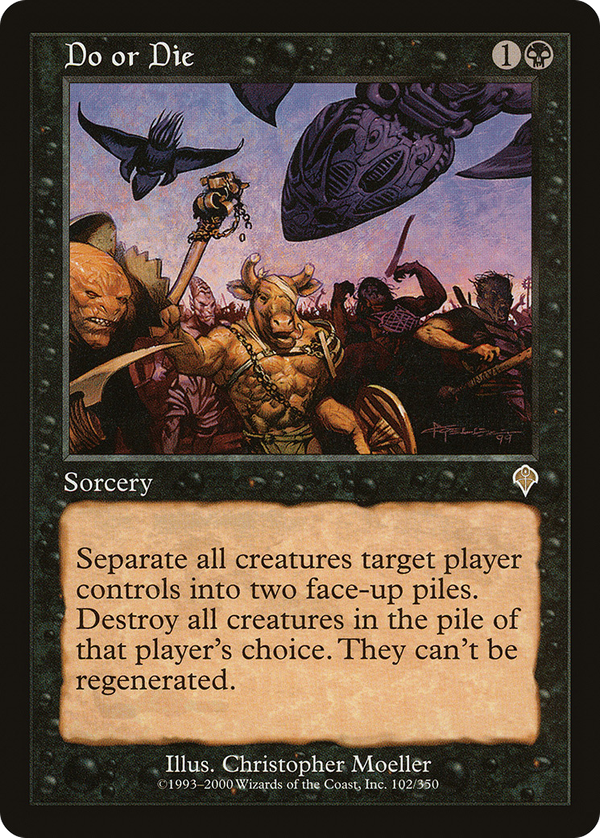
Do or Die


The genius is in handing the decision to your opponent. You sort their board into two piles, then they choose which pile dies; the design weaponizes that choice against them. A player faced with a clean split (their best threat in one pile, everything else in the other) is forced to keep one disaster or the other, and there is no arrangement of three or more relevant creatures that lets them save everything. The effect is at its most surgical against a deck leaning on a single bomb: isolate it, and the opponent watches you destroy the rest of their board, or sacrifices the bomb to keep the chaff. The "they can't be regenerated" clause matters, since this was an era when regeneration was a real defensive line, and the spell closes that door. What it cannot do is decide which specific creature dies, only which group, so a board of identical or equally important creatures dulls the edge considerably; the cleaner the disparity in the opponent's creatures, the sharper the cut. That dependence on a lopsided board is the cost built into an otherwise punishing rate, and it is what keeps a two-mana board-wipe-adjacent effect from simply being a one-sided sweeper. It rewards reading the opponent's board the way a chess player reads a fork: you are not removing pieces, you are constructing a dilemma.