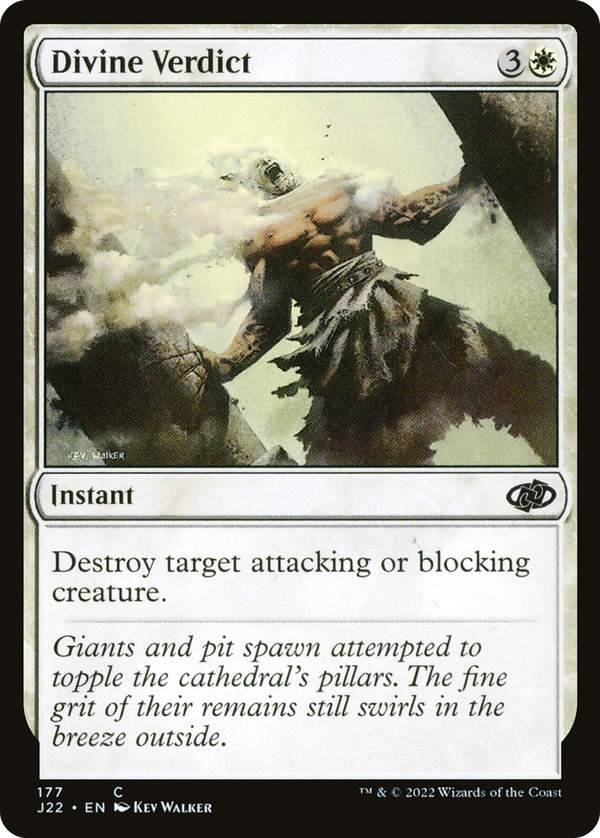
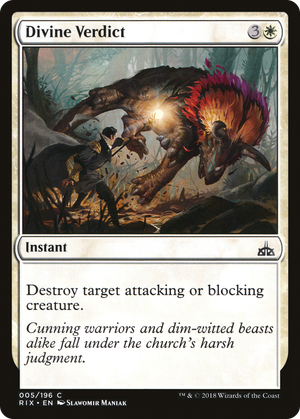
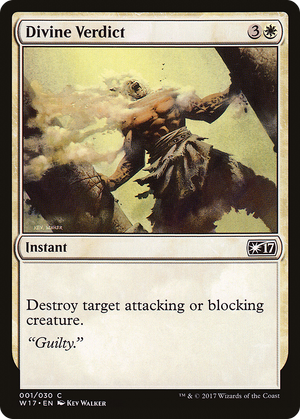
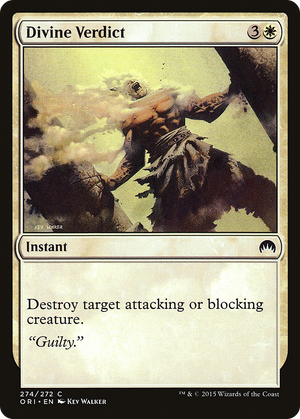
Divine Verdict


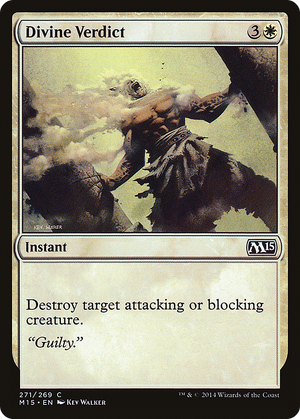
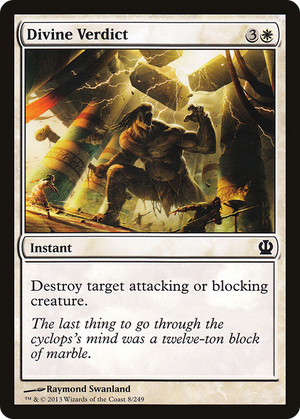
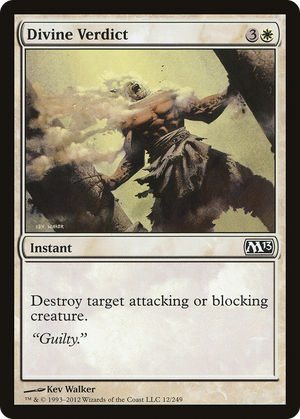
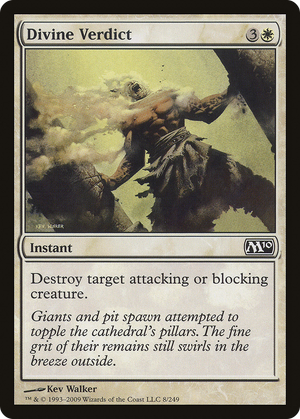
The combat-only clause is the entire tradeoff: this answers a creature only once it has committed to attacking or blocking, which means it sits dead against anything parked safely on the wrong side of the board. White has always had unconditional four-mana kill spells, so the conditional version does not buy back any efficiency; what it buys is timing flexibility, the option to wait until a threat steps into the red zone before deciding to spend mana on it. That makes it function less like removal and more like a defensive trick that needs no blocker of its own, a clean way to punish an opponent who finally pushes a stalled board. The instant speed is doing the real work here: the attacker has already declared itself, and this destroys it at the exact moment it tries to connect, blanking the damage and the body in a single motion. The cost keeps it squarely in the entry-level tier of white answers, the kind of common designed to teach newer players that holding mana through combat is a genuine line of play rather than wasted tempo. Sharper, cheaper kill spells long ago crowded it out wherever it might compete, but the principle it encodes (that the right timing window can stand in for raw efficiency) outlives the card.