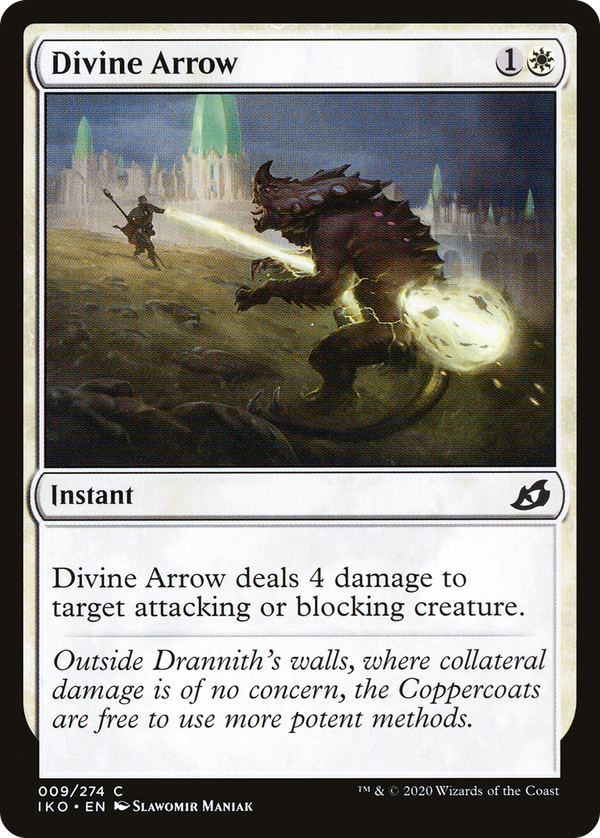
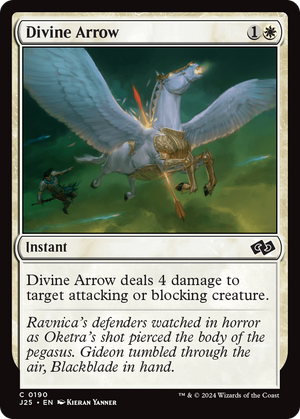
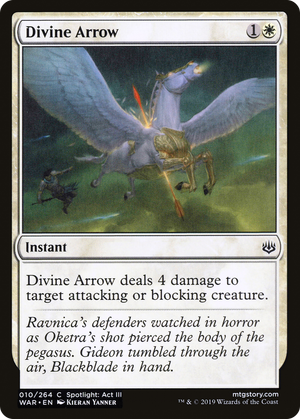
Divine Arrow


The whole card lives inside the combat step, and that constraint is what buys the four damage. Cheap white removal has always been priced against a limitation: a life-loss clause, a converted-mana ceiling, a "creature or planeswalker" restriction, a demand that the target be attacking you specifically. Here the limitation is a window rather than a size, and the window is generous. Four damage kills most things a two-mana spell would ever want to point at, but only once that creature has committed to combat as an attacker or a blocker. The card cannot break up a stalled board before swings are declared, cannot pick off an untapped mana dork, cannot preempt a threat sitting back on defense; it waits for someone to raise the sword. What makes that trade worthwhile is the arithmetic of the ambush. A defender can catch an aggressor who has spent the mana and the tempo committing a five-drop to the red zone, and losing it mid-combat is a far worse exchange than eating a proactive removal spell on an empty turn. The attacking side gets a subtler version of the same math: killing a blocker after blocks are declared will not push a blocked attacker through (the creature stays blocked absent something like trample), but it does erase the chump or the trade the defender was counting on, so a Divine Arrow held up while your creature swings turns a clean two-for-one into a lopsided exchange. It reads as reactive white removal, yet the "attacking or blocking" clause tends to reward whichever player forced the combat in the first place.