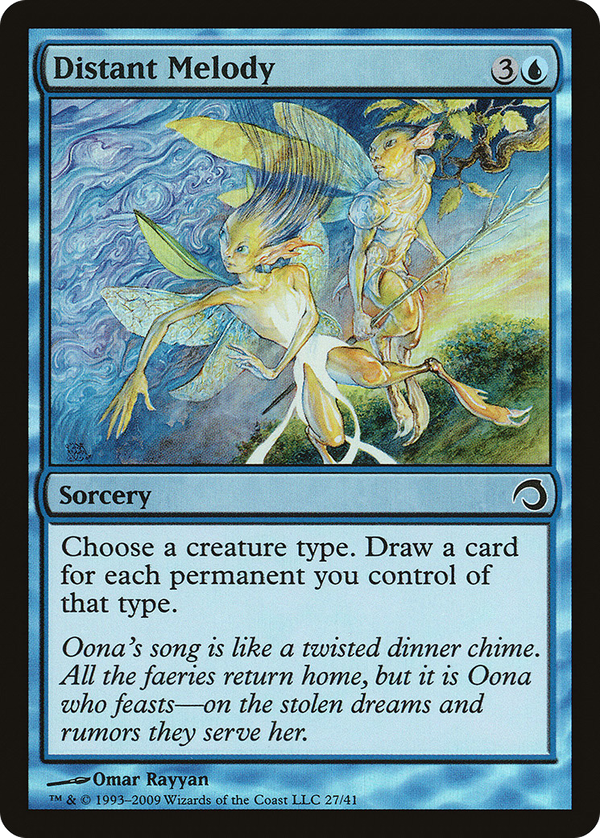
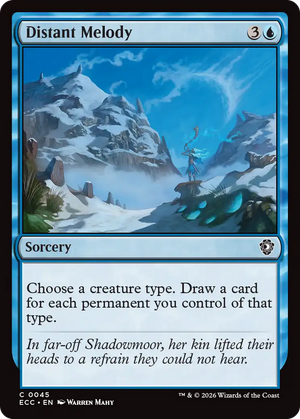
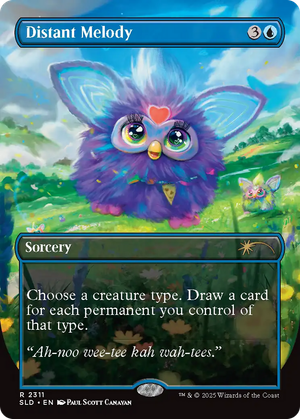
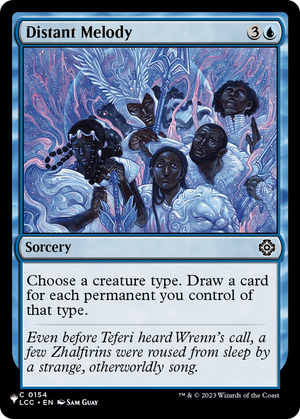
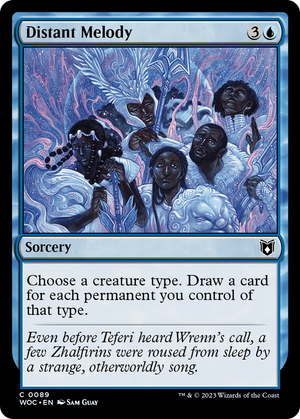
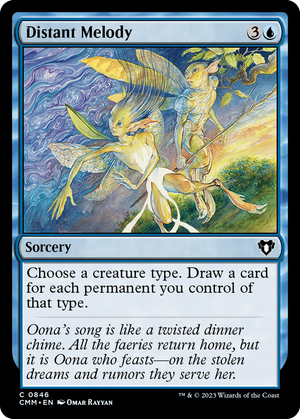
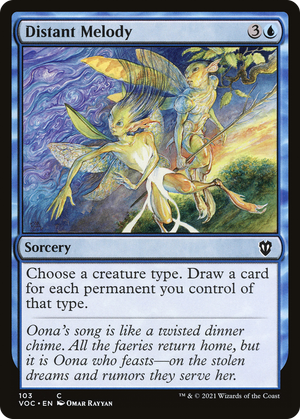
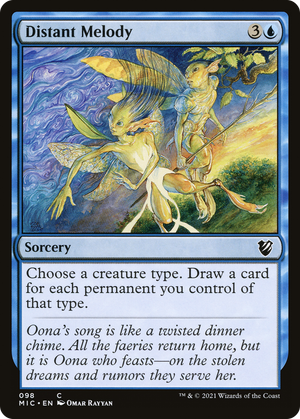
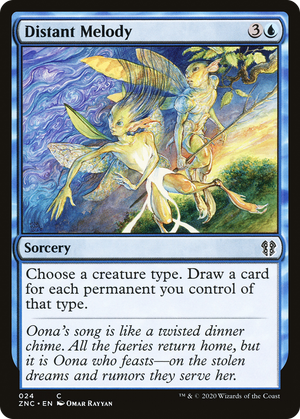
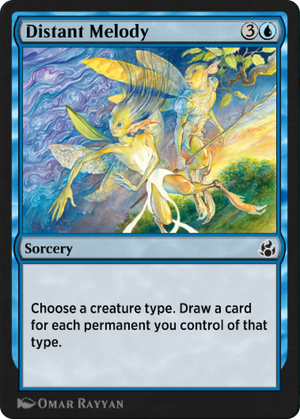
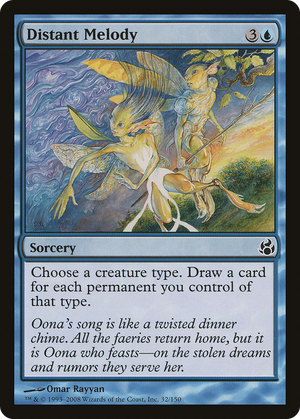
Distant Melody


Tribal decks usually buy card advantage one creature at a time: an attack trigger here, a death payoff there. This collapses the whole engine into a single sorcery, paying you a card for every permanent of the chosen type already on the board. The design tension is timing, not power. Cast it early and it draws two or three, a fine but unremarkable return for four mana; wait until a wide tribal board has assembled and the same spell refills your hand for five, six, or more. That asymmetry between an empty board and a full one is the entire balancing act: it does nothing to stabilize a losing position and everything to extend a winning one, which keeps a potential blowout firmly on the side of the deck that was already ahead. The creature-type clause counts permanents, not just creatures, so changeling effects and the occasional noncreature tribal permanent feed it too, but in practice the card lives or dies on how committed the board is when it resolves. It is the rare blue payoff that rewards going wide rather than going long, slotting into the aggressive end of tribal strategies where the usual blue plan of trading one-for-one and grinding to the late game does not apply. The reward scales linearly with a commitment you have already made, which makes it both the safest draw spell in a developed tribal deck and a near-dead card in any list that is not built around a single creature type.