Dismissive Denial


The dead-card problem is the oldest tax on hard counterspells: draw one against an aggressive board or a topdeck war, and you are holding four mana of nothing. Grafting basic landcycling onto a straight Counter target spell answers that directly. The counter half is the clean, unconditional effect the four-mana lineage has always offered: no restriction on what it hits, no mana clause, no window for the caster to pay around it. Whatever spell goes on the stack, this stops it. The cycling half is the release valve. When there is no spell worth answering, or when you are stranded on lands and need the back half of your curve, two mana turns the card into a basic, fixing and thinning at instant speed. That flexibility is what pays for the four-mana price on the counter side, which reads high next to the cheaper interaction elsewhere in blue. The design trade is deliberate: you accept a counter that costs more than most blue decks want to leave up, and in exchange you never mulligan around drawing it, because the floor is a land. It sits in the tradition of cards that fold a counterspell and a mana source into one slot, letting a deck run more interaction without diluting its ability to hit land drops. The counter wins games; the cycling keeps the card from losing them.
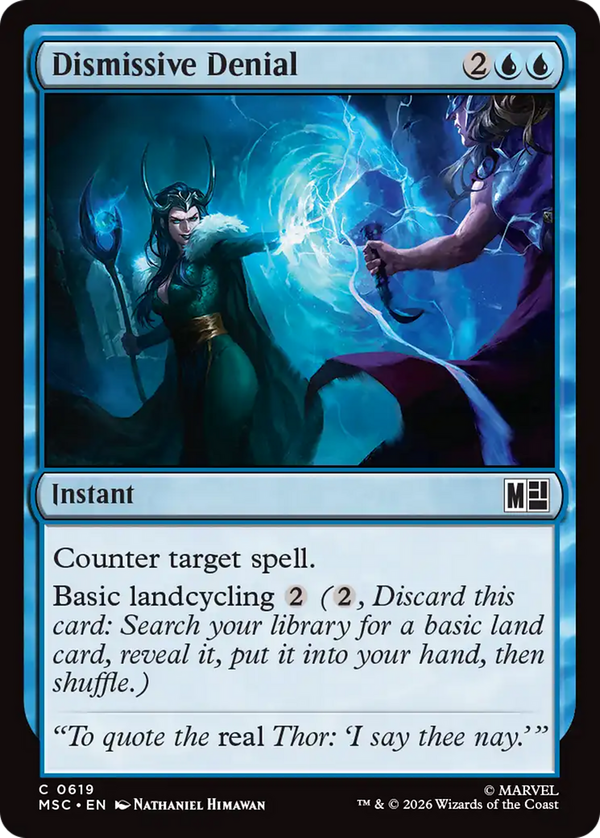
Rules text
(, Discard this card: Search your library for a basic land card, reveal it, put it into your hand, then shuffle.)