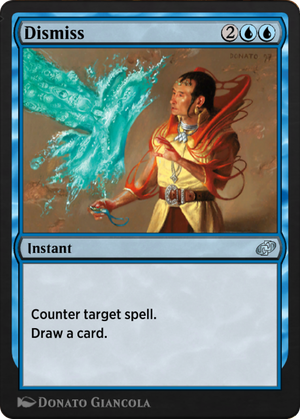
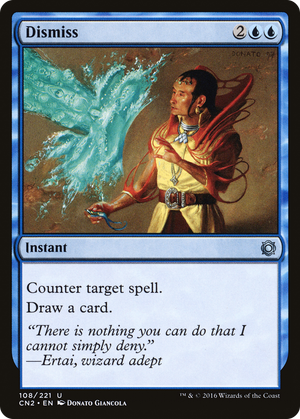
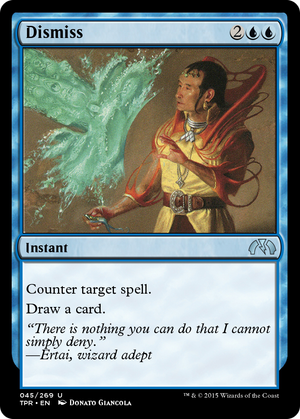
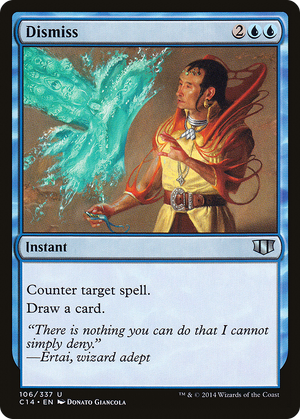
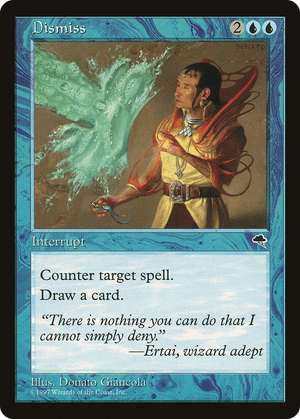
Dismiss


The counterspell that pays its own way: counter the threat, then draw the card that keeps the exchange from costing you anything. The math behind permission magic had always run against the controlling player. A bare-bones counter trades one-for-one, card parity at best, and parity is a losing posture for a deck that wants to spend the whole game answering threats one at a time while the opponent keeps drawing fresh ones. Bundling the cantrip onto the back end refuses to give that ground: every spell you stop also refills your hand, so the deck stays as thick as the one it is grinding down. The shape has been retuned for decades since. Cryptic Command folded counter-and-draw into one mode of a four-option spell; the plain "counter, draw a card" template recurs across generations of blue control fillers. None of those revisions abandoned the core insight that card advantage, not just permission, is what lets a control deck survive its own pace. Four mana is what keeps the trade fair: too slow to anchor a tempo deck, it lives in the patient shells that can hold up the full cost and still take the draw step. It needs a spell on the stack to do its work, which is the only string attached. This is the moment counterspell design stopped settling for parity and started turning every "no" into a fresh card.
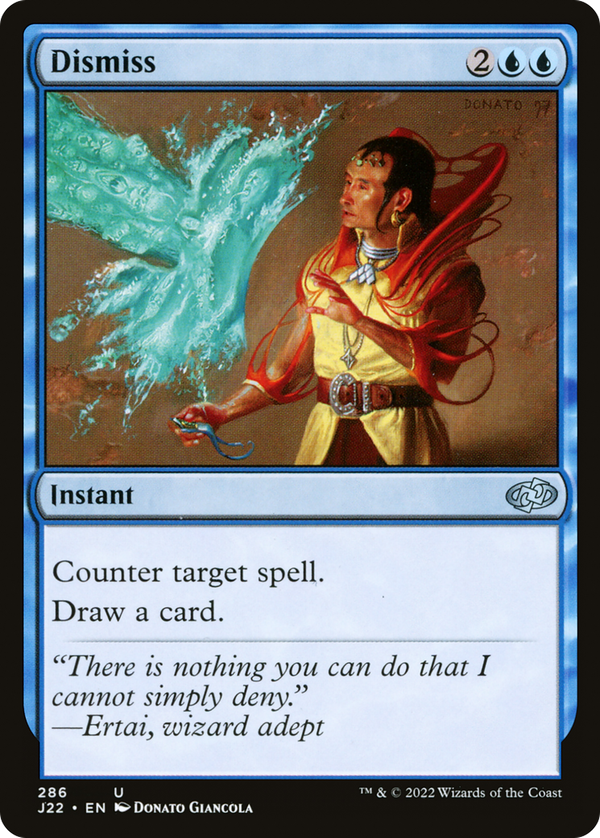
Rules text
Format Status
More formatsFewer formats
Other printings
- Jumpstart: Historic Horizons#182
- Conspiracy: Take the Crown#108
- Tempest Remastered#45
- Commander 2014#106
- Magic Online Promos#36060
- Commander 2013#39
- Arena League 2001#4
- World Championship Decks 1998#rb58a