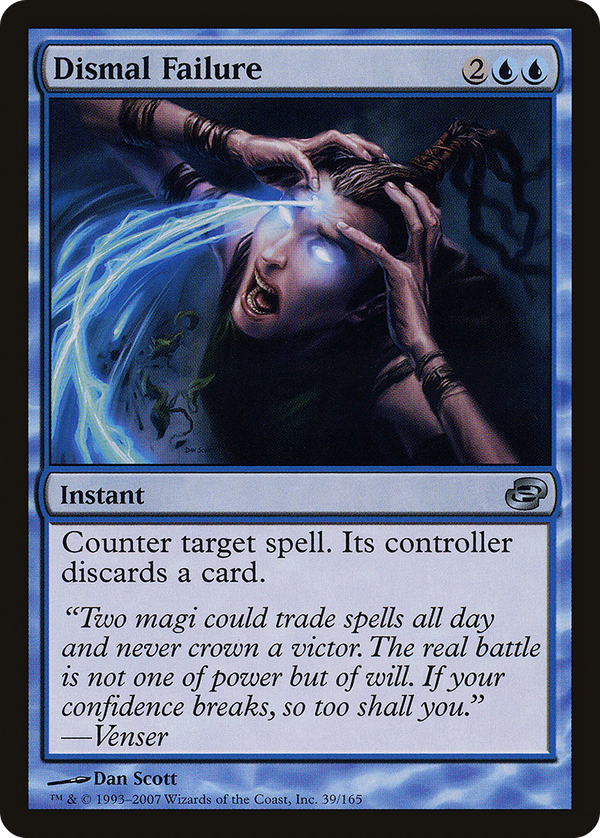
Dismal Failure


The pitch is the discard rider, and the two extra mana over a bare hard counter is what pays for it. Where the leanest counters ask only their two-mana floor, this one climbs to four and spends the difference converting a single answer into a double tax: it stops the threat being cast and strips a card from the hand behind it. That second hit is best understood as insurance against the topdeck war that follows a long game. Every spell countered this way costs the opponent two resources, and in a grind where the last card in hand settles the match, draining that extra card is the entire reason to run a four-mana counter instead of a two-mana one. The trade is an old one: counter magic in the early eras routinely bought a secondary clause by climbing the curve, and a hard counter stapled to hand attack sits squarely in that bracket. It is not the answer a tempo deck wants, where mana spent on interaction is mana not spent racing. It is the attrition tool, built for the deck that expects the game to go long and wants each piece of interaction to bleed the opponent a little further dry rather than simply hold the line.