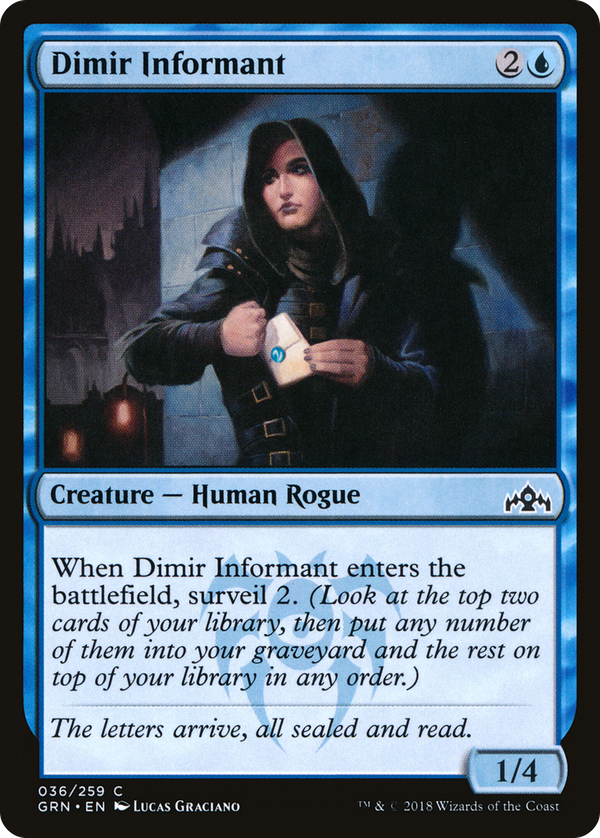
Dimir Informant


Surveil was introduced as blue-black's answer to a nagging design problem: how do you give a graveyard-attrition deck consistent selection without either forcing it to mill cards it wants or handing it a straight cantrip that makes the yard incidental? This is the clearest expression of that answer at common rate. A 1/4 for is built to survive rather than attack; it trades up against most early drops, blocks indefinitely, and demands nothing from your hand to do it. But the body is the alibi. What you are actually paying for is surveil 2 on the way in, a piece of selection folded into a creature with no ambitions in combat. The elegance of surveil over a forced mill is that it never costs you the card you wanted: anything you do not need goes to the bin, anything you do goes back on top, and you make that call with full information rather than blind. So the creature does two jobs at once for a control or attrition shell, smoothing the next two draws while stocking a graveyard for whatever payoff sits downstream, all wrapped in a defensive speed bump that buys the turns you need. The Rogue tag and the blue-black home are not decoration; they are the connective tissue of the archetype this card was made to serve. It is deliberately unexciting at the front, which is the point. The work happens before it ever raises a hand to block.