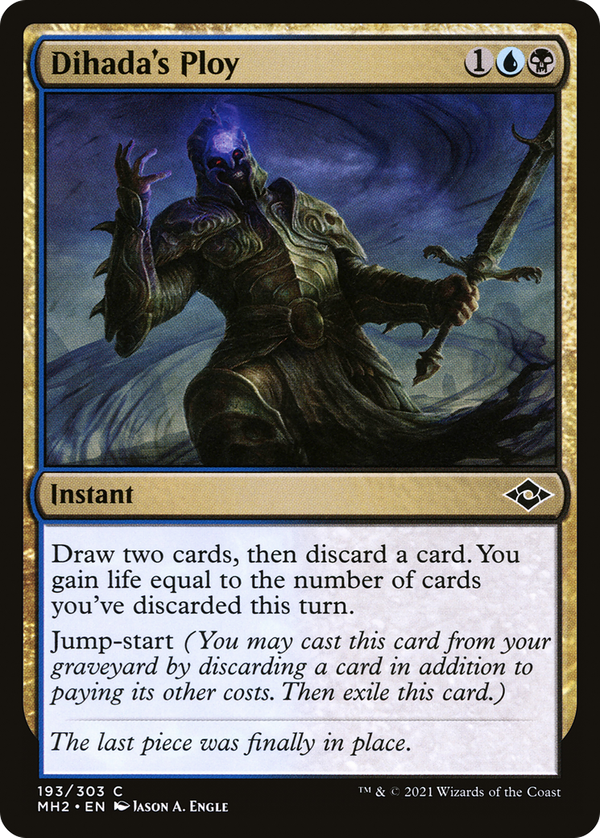
Dihada's Ploy



The lifegain clause is the wrinkle, because it counts every card discarded this turn rather than just the one that leaves your hand during resolution. Cast it from hand (draw two, discard one), then bring it back later in the turn via jump-start, which asks for its own separate discard as an additional cost, and by the time the recast resolves it can be tallying three or more cards in the bin and refunding life to match. That structure rewards a deck already treating discard as a resource rather than a tax: madness enablers, graveyard-fueled aggression, reanimation setups that want cards in the yard anyway. Note the arithmetic of the front half, though: cast from hand it spends one card and draws two, then discards one, netting zero cards but improving the ones you hold. It belongs to the lineage of instant-speed looting that converts quantity into quality (the Frantic Search and Careful Study school), but jump-start changes the math on the back end. You are not just filtering a fixed hand; you are paying discards you were already inclined to make and getting a life-total dividend for the trouble. Only actual discards feed the lifegain, so incidental milling does nothing for you. What determines the payoff is how eagerly the deck is pitching cards: the more a shell wants its own cards in the graveyard, the more this spell pays you for doing what you were doing anyway.