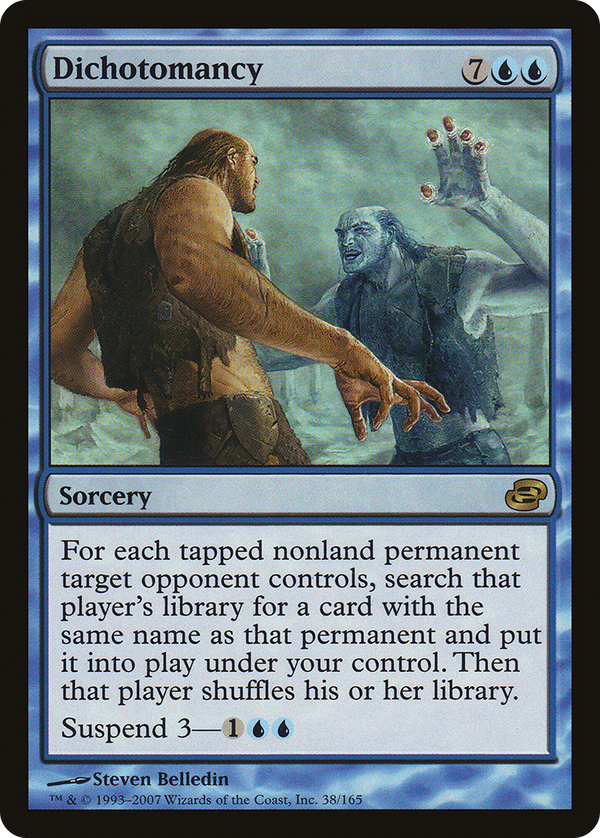
Dichotomancy


The conceptual color-swap here is theft pointed not at the board but at the deck behind it. For each tapped nonland permanent an opponent controls, you reach into their library for cards sharing that name and put those copies onto the battlefield on your side. The originals stay put; this is a search-and-replace, not a board-wide steal, and the distinction is the whole engine. The spell punishes redundancy from the wrong direction: a deck leaning on multiple copies of its best permanent hands you the copies it has not drawn yet, so the more committed an opponent is to a singular effect, the more of it ends up under your control. The tap clause is the timing constraint that both makes it work and works against it. Permanents only count while tapped, so the spell wants to land after an attack step or a string of activations, which makes it a reactive sorcery that punishes a board that has just spent itself. Suspend softens an otherwise steep price, letting you set the trap three turns out at a discount and gamble that the opponent will be tapped down by the time the spell resolves on its own. It is less a sweeper than a redirection of the opponent's deckbuilding investment, sharpest against exactly the kind of consistency every constructed deck is built to chase.
Rules text
 (Rather than cast this card from your hand, you may pay and exile it with three time counters on it. At the beginning of your upkeep, remove a time counter. When the last is removed, you may cast it without paying its mana cost.)