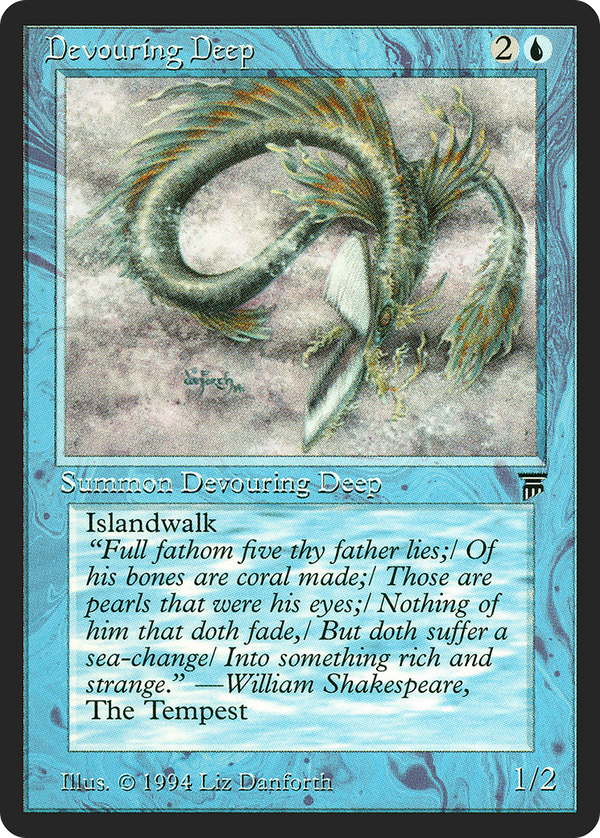
Devouring Deep


Islandwalk on a fragile blue body captures an early-design philosophy that has largely been retired: color-hosing built into a creature's evasion, paid for with a stat line that is well below the curve everywhere except the one matchup it was built to beat. A 1/2 for three mana accepts that penalty in exchange for an evasion clause that reads as unblockable against the mirror and as a vanilla underdrop against everyone else. This is the same logic that produced the rest of the landwalk family: the card is priced for its best matchup and expected to rot in the others, with sideboarding and metagame prediction doing the work that flexibility does on a modern creature. The mechanic itself survived in pockets (merfolk tribal kept Islandwalk relevant for decades), but the underlying bargain (accept a weak floor for a narrow ceiling) is the kind of trade Wizards stopped offering once they decided players would rather have a creature that does something against every deck than one that wins a single matchup and loses the rest. A small artifact of the era when color identity was something you attacked through your creatures, not just your spells.