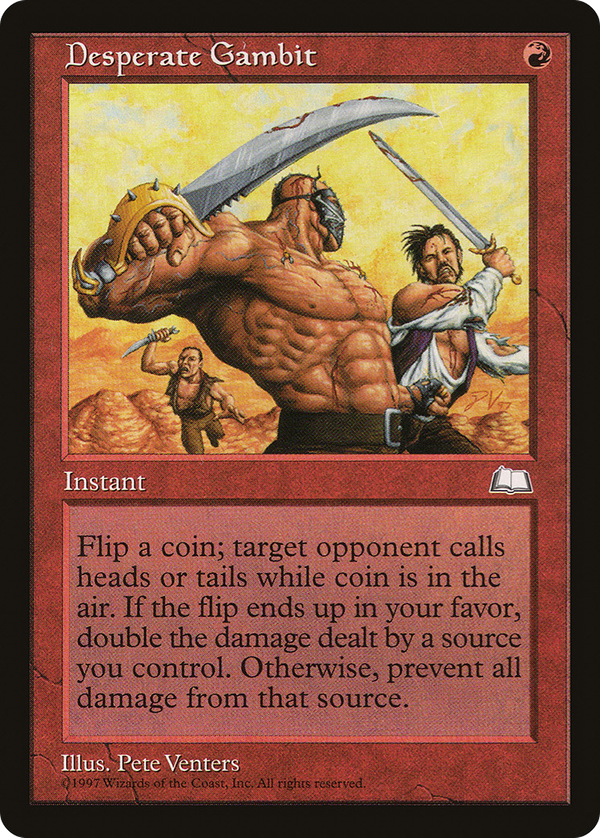
Desperate Gambit

A coin flip stapled to a combat trick, which is exactly the kind of high-variance toy mid-nineties design loved and the modern game has almost entirely abandoned. The structure is a pure gamble dressed as a damage modifier: you lock in both the source and the spell first, then flip, and only then learn whether the next damage that source deals gets doubled or prevented outright. That commitment is the point. The downside is not a fizzle or a wasted card; it is your own attacker dealing zero, which can hand the game away as readily as the upside steals it. Because you name the source and the "next damage this turn" window before you know the result, the spell has to be sequenced around a damage source you were already committing to, with no way to redirect the bet once the coin is in the air. Coin-flip cards are a tiny, self-contained corner of red's identity, the place where the color's chaos theme stops being a metaphor and becomes a literal fifty-fifty, and most of them (Karplusan Minotaur, Mijae Djinn, the various Krark pieces) lean into the unreliability as a feature. This one is the cleanest expression of that ethos: no body to protect the investment, no hedge, just a single red mana asking whether you trust your luck more than you trust your math. It rewards nothing except the willingness to flip, which is precisely why it has always lived at the margins.