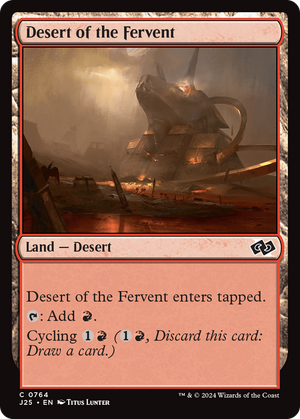
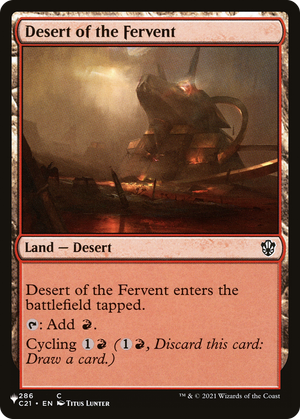
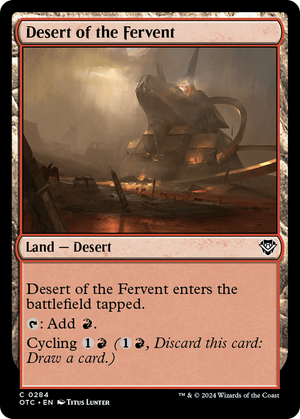
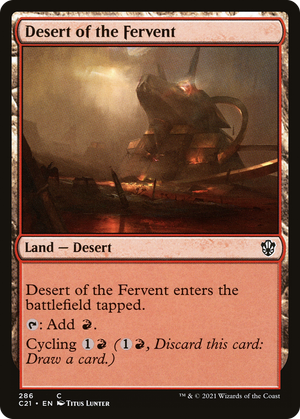
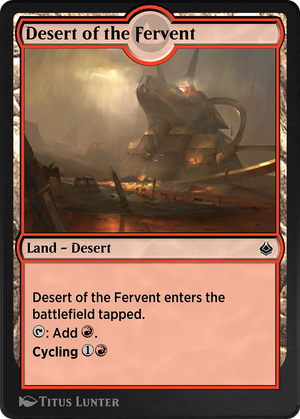
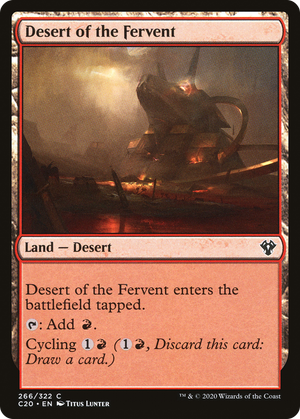
Desert of the Fervent
The cycling-land cycle's whole pitch is hedging against flood without costing a card, and this is the red member: a tapped source of red mana when you need a land, a fresh card when you are done drawing them. The tapped clause is the price you pay for that flexibility, and it is a real one, since a land that enters tapped on the turn you most want a red source is a tempo tax baked into the rate. What balances the conceit is that the cycling cost is deliberately steep: at one-and-a-red, you never reach for it casually, only when the alternative is your seventh land hitting an empty board. The design lesson it carries is that a land which can become a spell is worth more than the sum of either function, because the same slot is good early and good late. The deckbuilder pays for that smoothing twice over: a turn of tempo when the land enters tapped, and two full mana when the time comes to cash it in for a card. Neither cost is trivial, and together they keep the flood insurance from being free. It is utility infrastructure rather than a marquee card, doing quiet work in red decks that want a release valve on their late-game draws.
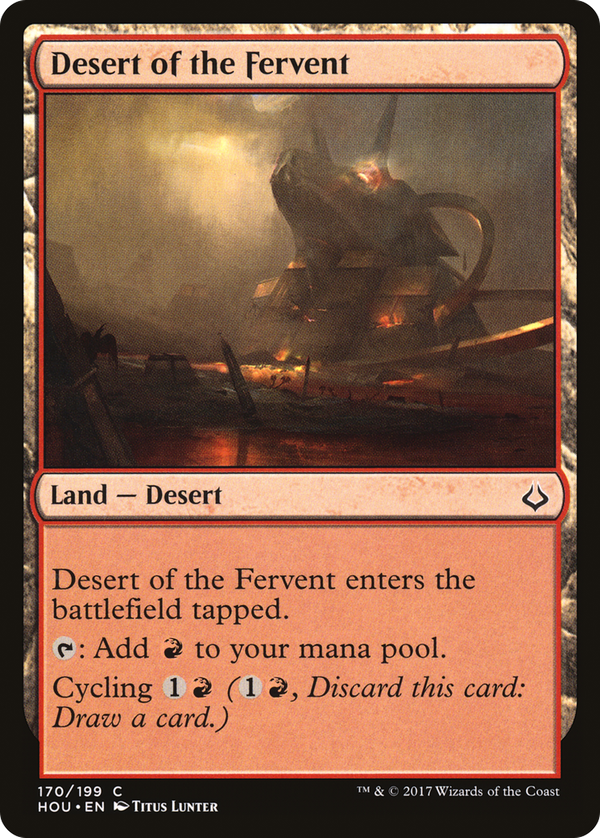
Rules text
 : Add
: Add  .
Cycling
.
Cycling  (, Discard this card: Draw a card.)