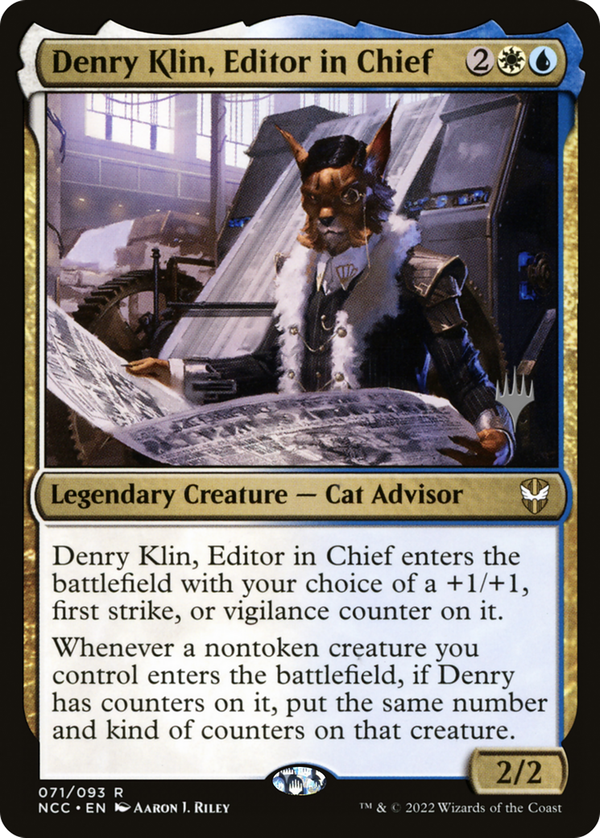
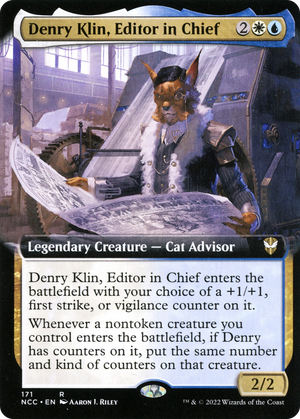
Denry Klin, Editor in Chief



The interesting move here is that the counter you pick on entry becomes a template stamped onto every nontoken creature that follows. Most counter payoffs care about counters already in play; this one manufactures a single counter on the way in and then copies its own configuration forward, so the +1/+1, first strike, or vigilance chosen at the start propagates without any further input. That makes the choice on entry a genuine commitment: a vigilance build wants a wide attacking board that can also hold the fort, a first strike build turns modest bodies into favorable blockers and profitable attackers, and the +1/+1 line is the raw stat engine. Because the trigger reads "the same number of each kind of counter," the effect scales with anything that piles more counters onto this body while it stays on the battlefield: proliferate and additional counter sources widen the stamp applied to future arrivals. That scaling is fragile, though. The stamp lives on the creature itself, so if it dies and returns it enters as a new object with only its single chosen entry counter, resetting to whatever counter you pick on the recast; the accumulated configuration does not survive a trip to the graveyard. The nontoken restriction is the honest limiter, keeping this out of token-swarm engines where the copy effect would spiral. What you get is a 2/2 that functions less as a threat than as a set of instructions for the creatures behind it: it does nothing to the board it joins and everything to the board it has not built yet.