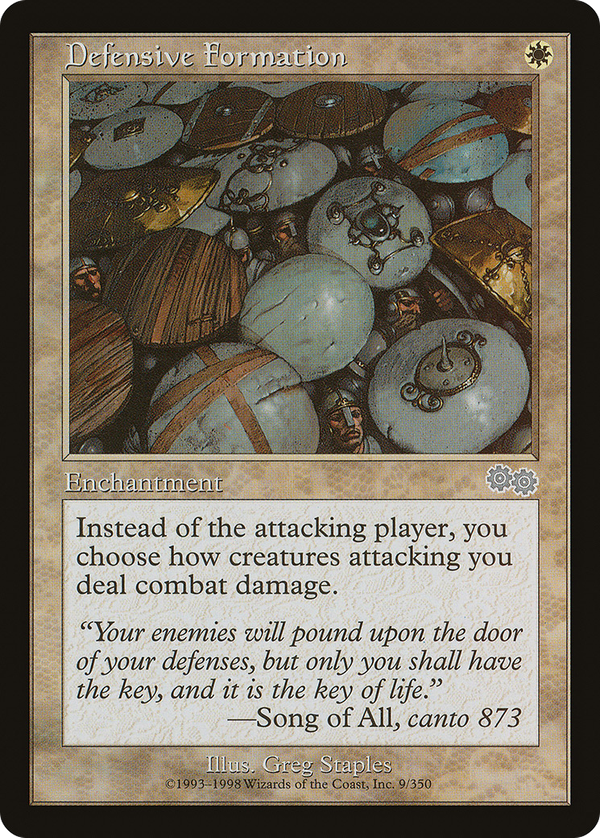
Defensive Formation

The damage-assignment rules are the rarely-touched substrate of combat, and few cards reach in and rewire who controls them. Normally the attacking player decides how an attacker's damage is divided among multiple blockers; the defender just declares blocks and absorbs the result. Flip that control to the defending player and the math of multi-blocking inverts. You can throw two small creatures in front of a single attacker and put none of its damage on the one you care about saving, or pile all of it onto a single chump while the rest of your wall survives untouched. Gang-blocking stops being a sacrifice and becomes a precision instrument: the defender, not the attacker, decides which blocker eats the blow and which walk away. Against a creature with a damage-dependent trip wire (anything that wants to deal a certain amount to a certain target), seizing assignment control can defang it entirely. The limit baked in is that it only operates while you are the one being attacked, on the opponent's turn; it does nothing to govern your own attacks, which keeps it a wall-and-grind tool rather than an offensive engine. This is pure rules-text manipulation, an effect that lies dormant until two creatures meet in combat and then quietly hands you the most consequential decision of the step.