Deem Inferior


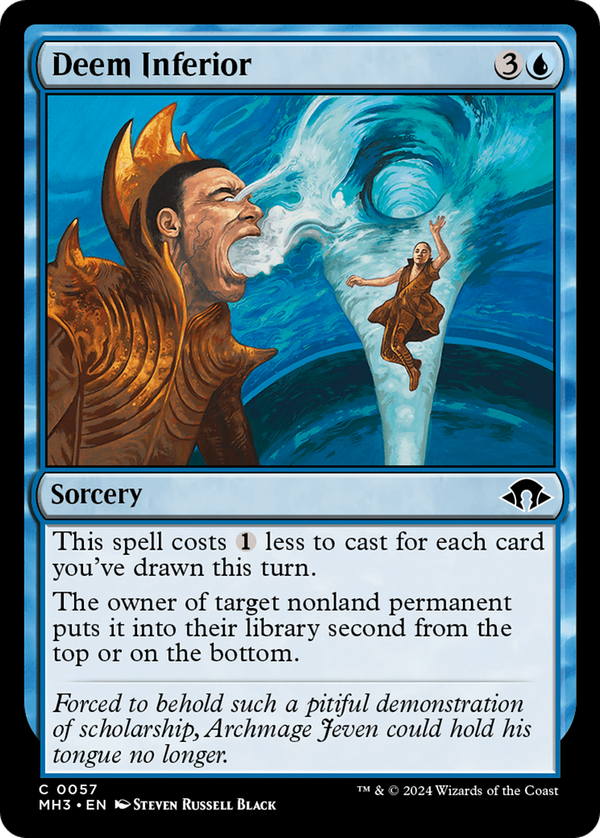
The design lives in the destination clause: not exile, not the front of the deck, but second from the top or on the bottom. That is a tuck effect, the kind of removal built to answer permanents that shrug off death. A recurring threat gets buried instead of returning; an indestructible body goes away without needing to be destroyed; the second-from-the-top option is the pointed one, letting the owner draw one card before the tucked permanent surfaces while costing them a full turn of tempo. Where most bounce hands the threat right back, this one puts it somewhere it takes real time to see again. The generic cost reduction is what keeps a four-mana sorcery from being too slow to interact: shave  for each card drawn this turn, and after two or three draws the spell collapses toward its floor of . The colored pip never goes away, so it cannot be free, but it can be cheap enough to fire alongside everything else you were already doing. That pins the card to a particular way of building: cantrips and repeatable draw have to be flowing before you want to answer anything, because at full price this is a tempo loss you do not want to eat. It is reactive removal designed for the deck that spends its turns drawing anyway, rewarding the point in the game where the cards have already piled up rather than the moment you first need to respond.
Rules text
less to cast for each card you've drawn this turn.
The owner of target nonland permanent puts it into their library second from the top or on the bottom.