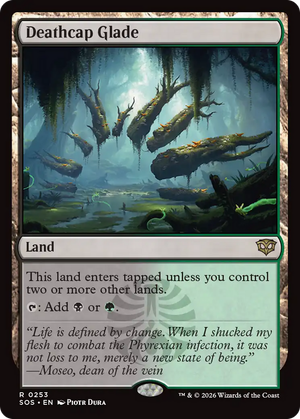
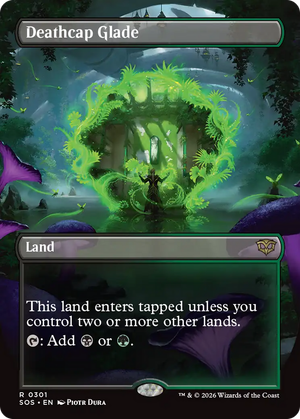
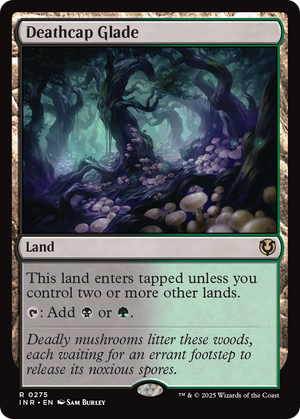
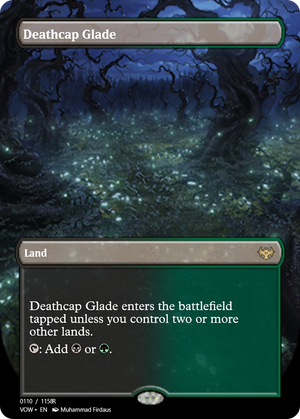
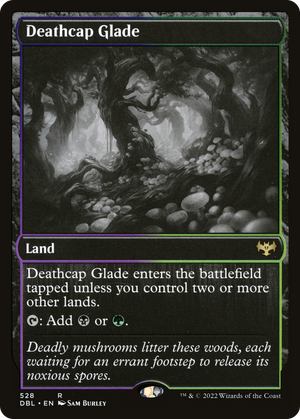
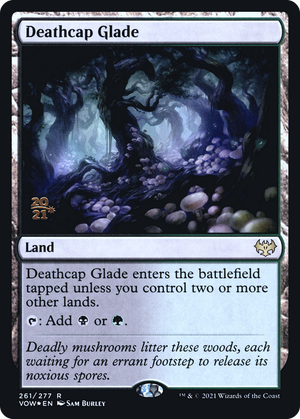
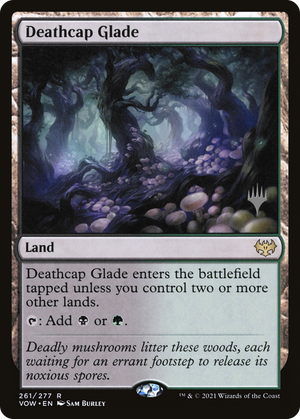
Deathcap Glade
The dual-land design problem these solve is the trade-off between the checkland and the tapland. Checklands like Woodland Cemetery come in untapped only if you already control the right basic land type, which punishes color-hungry openers and manabases short on typed sources. Taplands never punish your composition but always cost a tempo. This cycle rewrote the condition: instead of asking what kinds of lands you control, it asks how many, entering untapped once you have two or more other lands regardless of what they are. That reframing is the whole point. It front-loads the pain onto the first two turns, precisely when a tapped land hurts least in a deck that curves out, and then flows freely from turn three onward. The dual color it produces here, black-green, sits in the reactive-graveyard and midrange space where the early tempo cost is most tolerable, since those decks rarely need untapped mana on turn one. The comparison that clarifies the design is the fastland, which inverts the timer: untapped on the first three lands, tapped after. Fastlands reward the fastest decks; these slow lands reward decks that are happy to spend a turn setting up. The condition counting other lands rather than land types is what makes the count, not the composition, the thing you build around.
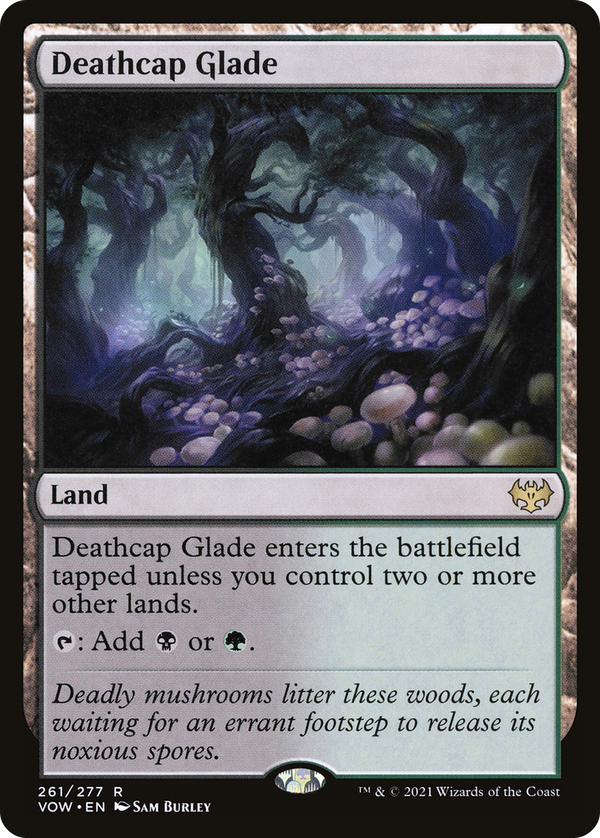
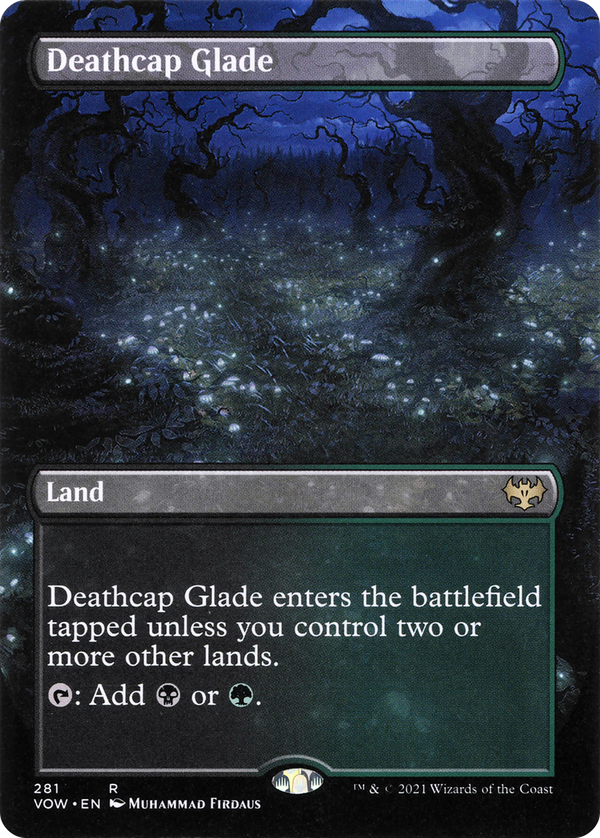
Rules text
 : Add
: Add  or
or  .
.