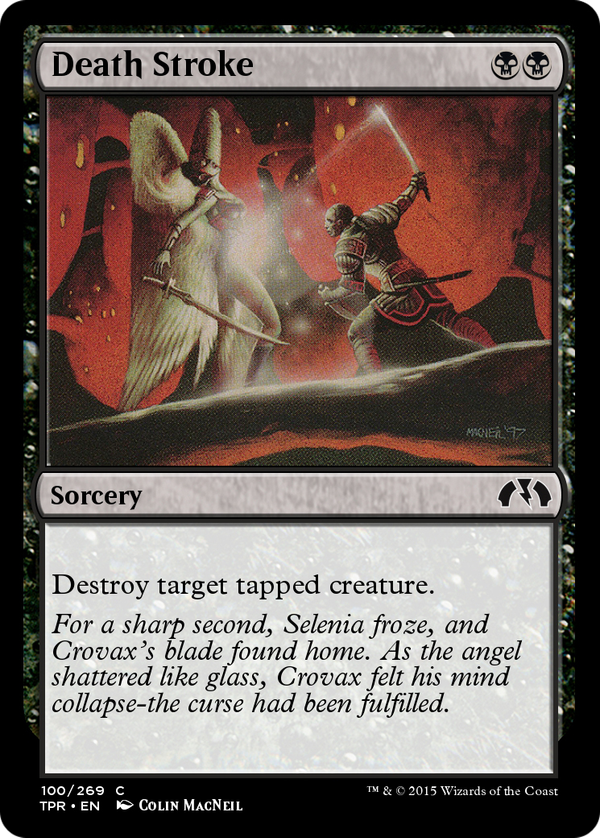
Death Stroke

Black removal that pays for its low cost with a verb that does all the heavy lifting: the creature has to be tapped. That single word turns this from a clean kill spell into a conditional one, and the condition is one the caster usually cannot create on their own. The card wants a board where attacks have happened, where vigilance is absent, where the opponent has tapped a blocker or spent mana on an activated ability. In practice it is a reactive answer to the act of attacking, punishing the creature that just swung rather than the creature sitting back on defense. That is a meaningfully different design axis from unconditional black removal like Terror or Murder: instead of paying more mana for the privilege of killing anything anytime, you pay almost nothing and accept that the target gets to choose, with its own untapped state, whether to be safe. The restriction also quietly rewards decks that can force tapping (anything that incentivizes or compels an attack), which makes the card less a standalone removal slot and more a piece that wants a board state built around combat tempo. It is a small, honest example of how early black removal was priced: cheap kill spells existed, but each one carried a clause that made it situational, and the clause here is timing rather than creature size or color.