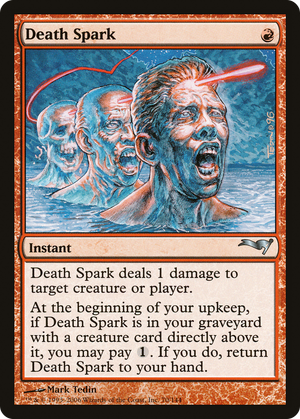
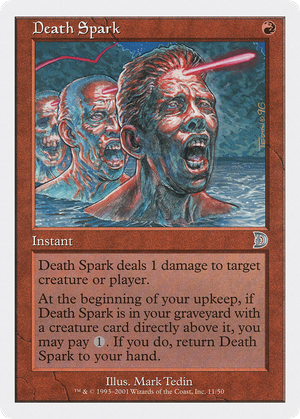
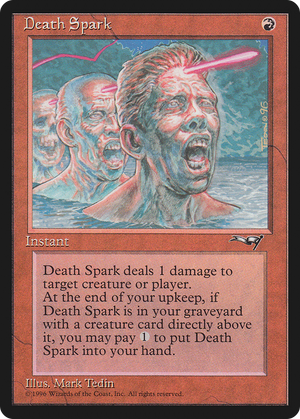
Death Spark

The recursion clause is what makes this an experiment rather than a burn spell. The ping is trivial; the genuinely strange part is the buyback condition, which cares about graveyard order, a dimension of the game almost nothing else touches. The card has to sit in your graveyard with a creature card directly on top of it (the card immediately above it in the pile), and only then can you pay one mana on your upkeep to return it to hand. That layering requirement ties the engine to how the yard is stacked, rewarding a deck built to keep feeding creatures over the spark so it stays buried at the right depth. The payoff is a trickle of reach that never quite leaves: a recurring point of damage that grinds down small creatures, planeswalkers, or a player across many turns rather than in one burst. The friction is what keeps it honest, namely the mana tax every upkeep, the fragility of the layering, and the meager single point of damage per trip. That friction is exactly why a repeatable one-mana damage source does not become oppressive. It reads as early thinking about the graveyard as a managed resource, asking the deck to curate its own pile rather than just dump cards into it. The specific mechanism (caring about which card rests on top of which) has rarely been revisited since, which leaves it a curiosity of a period when designers were still probing what the graveyard could be made to do.
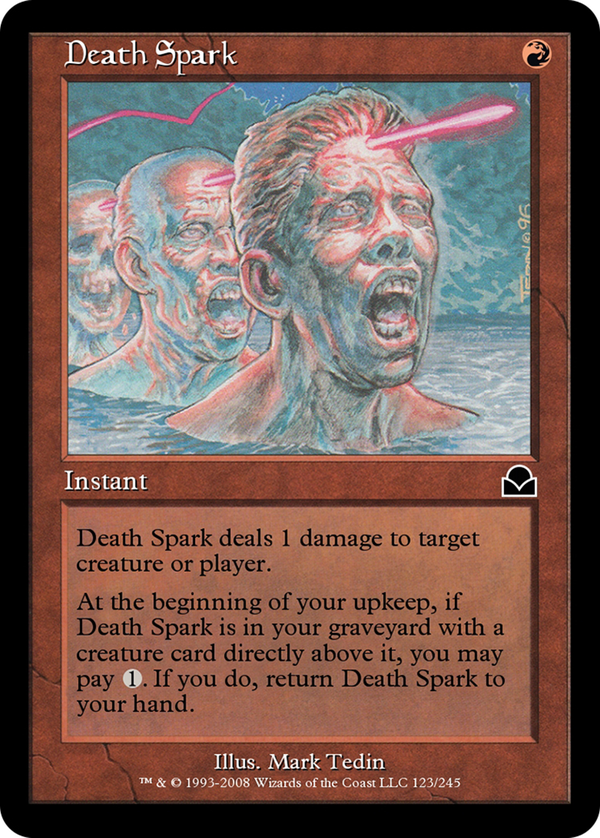
Rules text
 . If you do, return this card to your hand.