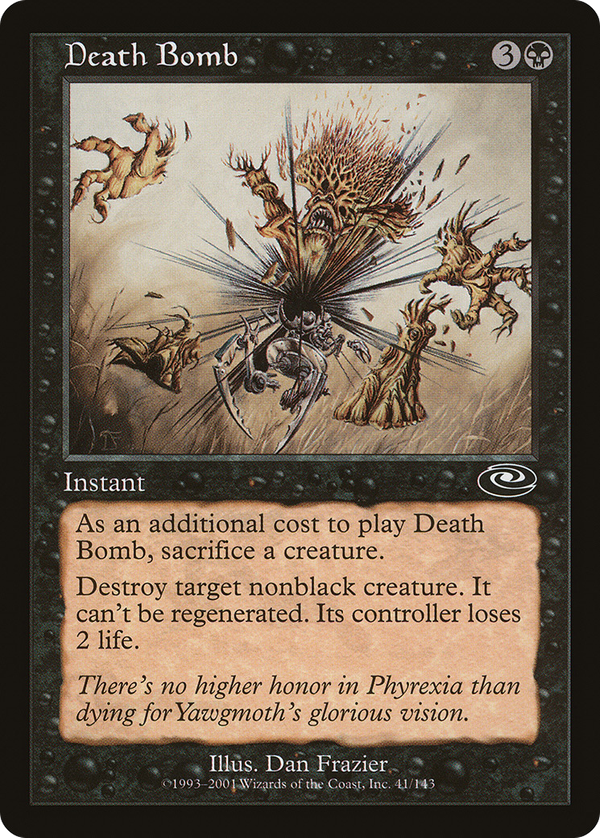
Death Bomb


Four mana and a creature sacrifice to kill a nonblack creature with no regeneration and a two-point life clip: by any rate standard this is a bad removal spell, and it was a bad removal spell the day it was printed. What it actually is, is a piece of color-pie enforcement from an era when black's removal still came with strings. The nonblack restriction is the tell: black was not allowed to cleanly answer its own kind, so the card draws a wall around mono-black mirrors and forces you to find another tool there. The mandatory creature sacrifice was the second tax, the price the design charged for an instant-speed, no-regeneration kill that also chips the opponent's total. Read those two clauses together and the intent is plain: this was built to convert a dying or expendable body into removal plus a little reach, an aristocrats-style trade before that word meant anything. The two life loss is not lifeswing; it is a one-way nudge toward decks that close games by attrition rather than tempo. Modern black removal long ago shed these taxes, killing nearly anything for a fraction of the cost without asking for a sacrifice, which is exactly why a card like this reads as a fossil: a snapshot of how cautiously the early game metered what black was permitted to destroy and at what cost.