Deadly Cover-Up


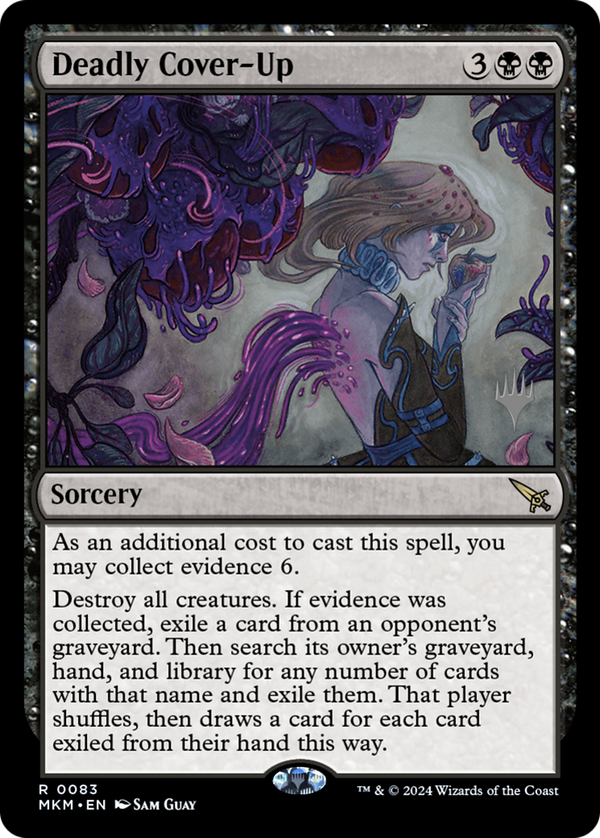
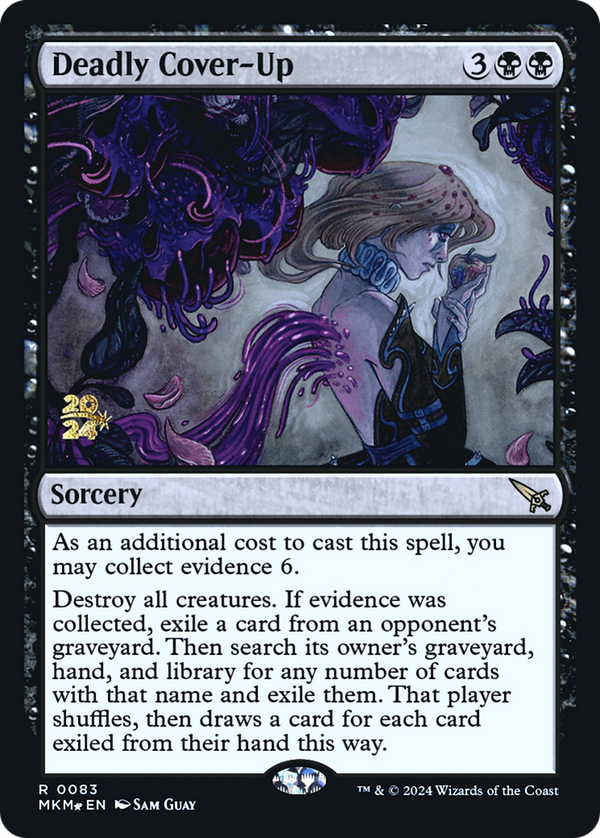
Board wipes have always been priced on their sweep and nothing else: pay the mana, kill everything, move on. The optional evidence tax buys something no traditional wrath offers, which is not more destruction but a surgical strike at a specific card name across every zone that matters. Collect evidence 6 turns a symmetrical five-mana sweeper into a two-part play: clear the battlefield, then reach into an opponent's graveyard, name a card, and exile every copy from graveyard, hand, and library at once. That second half is the real design, because it answers the thing conventional sweepers ignore. A wipe stalls a board; this uninstalls a strategy. Combo pieces, recursive threats, a deck's four copies of its keystone: name it and it is gone, with the shuffle-and-draw compensation just soft enough that the exiled player rarely feels made whole. The graveyard requirement is the constraint that keeps the design honest: you can only exile a name already sitting in an opponent's yard, so the surgical mode is reactive rather than a blind guess, gated behind whatever your opponent has already spent. Take away that clause and you would have a pure hand-and-library extraction spell aimed anywhere; keep it, and the effect stays anchored to what has already been committed. Without evidence it is a plain destroy-all-creatures; with it, it becomes one of black's rare answers to redundancy itself, targeting the concept of a card rather than a single copy.