Darkwatch Elves


Urza's block was where Wizards leaned hardest into cycling as a hedge against dead cards, and this Elf is one of the era's cleanest demonstrations of the philosophy. The body is a narrow tool: protection from black turns a 2/2 into a brick wall against the color's removal and a clean blocker against its creatures, which mattered enormously in a metagame defined by black control and reanimator strategies. But protection is conditional value, useless when the opponent is mono-red or playing creatureless combo. Cycling is the answer to that conditionality. When the hatebear text on the card is irrelevant, the card stops being a 2/2 and becomes a fresh draw for two colorless mana. That is the real design idea here: a maindeckable answer that never costs you a card slot, because the floor is "cantrip" rather than "do-nothing." Modern hatebears handle this same tension with split cards or modal faces; in 1999, cycling was the mechanism that let a build-around defensive creature earn a deck slot without the deckbuilder gambling on whether the opponent would show up with the right colors. The protection is the upside; the cycling is what makes including the upside free.
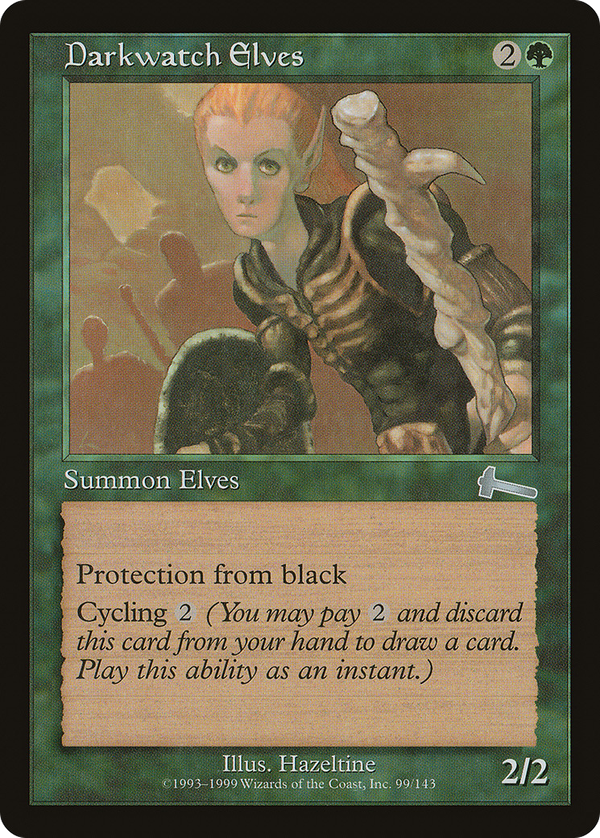
Rules text
(, Discard this card: Draw a card.)