Danny Pink


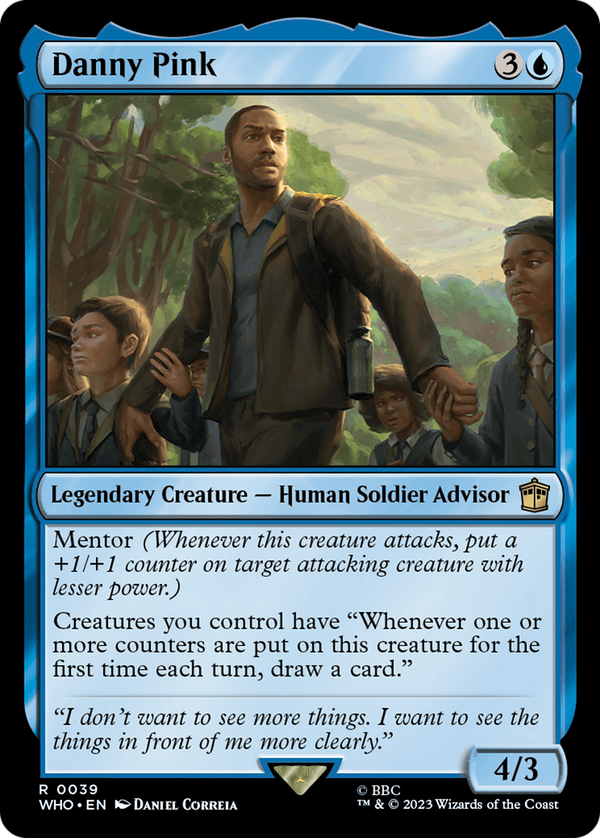
Mentor already hands a counter to a lesser-power attacker every time this swings; the anthem then teaches every creature you control to draw a card the first time any counter lands on it in a turn, which quietly rewrites what a +1/+1 counter is worth. In most decks a counter is a stat tweak; under this static ability it is card advantage, and the once-per-turn-per-creature clause is doing load-bearing work, keeping the effect from becoming a runaway loop that empties your library the moment counters start doubling up. The reach extends well past Mentor: proliferate, adapt, training, bolster, any effect that scatters counters across a board becomes a draw engine, and even a single counter placed on a fresh creature each turn is a card in hand. The 4/3 body is the mundane half of the pairing, an attacker that feeds a Mentor counter to something with lesser power, which happens to be the exact counter that trips the anthem. The interaction between the two lines is what makes it tick: the attack step feeds the payoff with no outside help, so the floor is a self-contained value engine, while the ceiling scales with how many counter sources you can assemble. It reframes a counters-matter plan around drawing cards rather than growing threats, and asks you to treat counter placement as a resource spread thin across bodies rather than stacked deep on one.