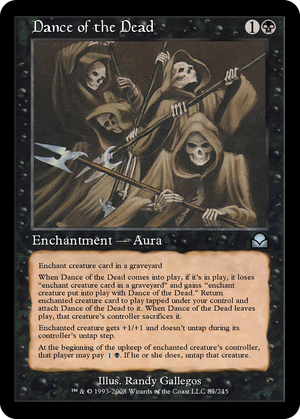
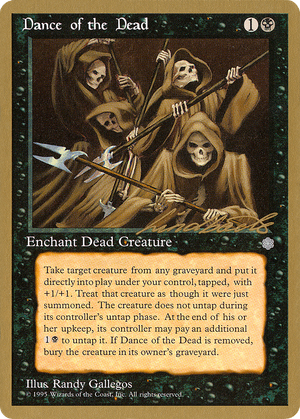
Dance of the Dead


Among the earliest reanimation spells, and one of the fiddliest: the design reads less like a clean "return a creature to play" effect and more like a contract with terms. The creature comes back tapped and refuses to untap on its own, so the upkeep tax (pay or leave it tapped) is the recurring cost of keeping the body useful in combat. That stapled drawback is the discipline that justifies the two-mana rate; later reanimation tightened the constraint into a single up-front payment, but this card keeps charging you. The rules engineering is the more remarkable part. The Aura legally enchants a creature card in the graveyard, then rewrites its own enchant clause the moment it resolves so it can stay attached to the creature it just put onto the battlefield. That self-modifying text exists because the card predates clean templating for "bring a thing back and attach to it," which is why Dance of the Dead carries its reputation as a rules-headache card: the leaves-the-battlefield sacrifice trigger, the conditional enchant swap, and the tap-state interaction all have to be tracked in sequence. The +1/+1 is almost an afterthought next to the bookkeeping. This is early-MTG problem-solving in its rawest form: designers stacking literal text to steal a body out of the graveyard and keep an Aura on it, rather than reaching for a keyword that did not yet exist.
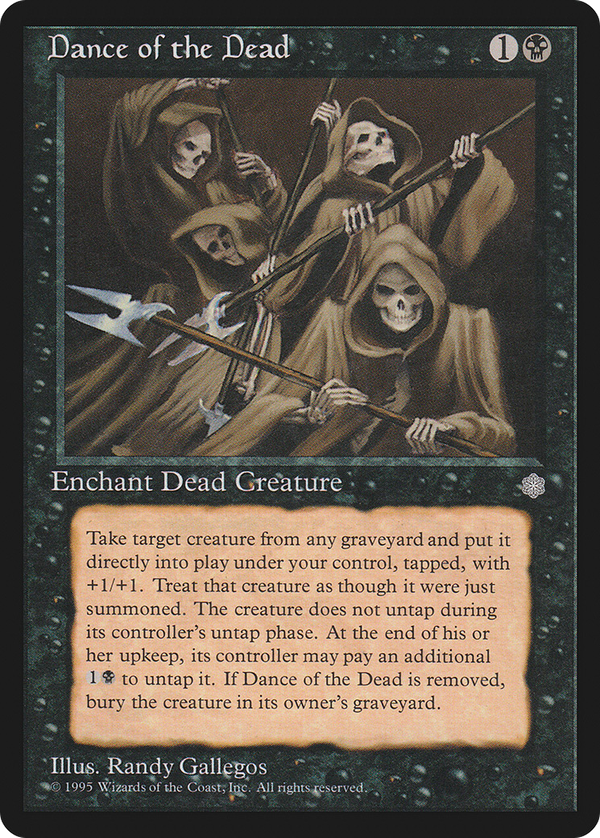
Rules text
. If the player does, untap that creature.