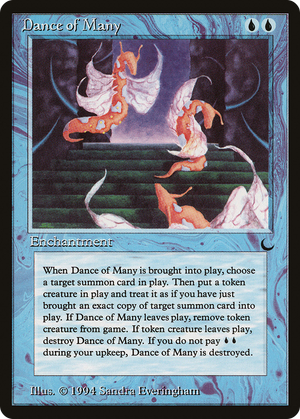
Dance of Many

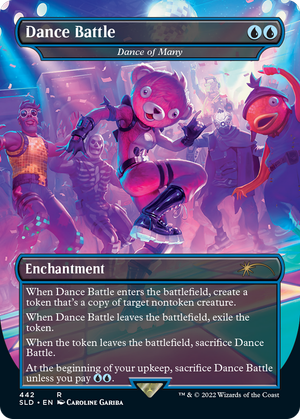
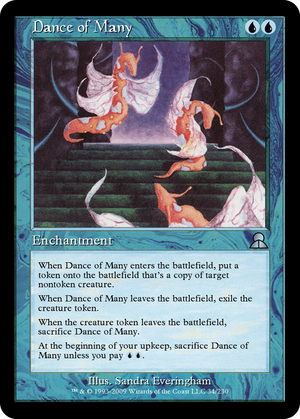
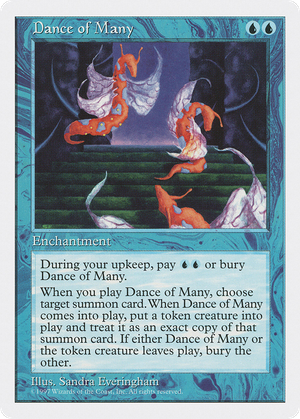
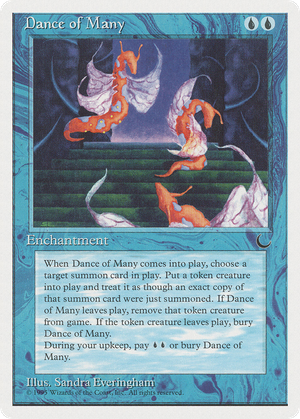
A clone effect stitched to a chain of failure conditions, and the chain is where the design lives. Most copy effects, then and since, simply make a token and walk away. This one builds a dependency loop instead: the enchantment exists because the token exists, the token exists because the enchantment exists, and either one dying drags the other down with it. That mutual fragility is the price for a copy that lingers on the battlefield as an enchantment rather than burning out as a one-shot sorcery. The upkeep tax compounds the bind, asking you to keep paying to hold a creature you do not own outright, which means the card is never quite yours and never quite settled. It is a famously rules-tangled object: two distinct leaves-the-battlefield triggers (one fires when the enchantment goes, the other when the token goes) plus the upkeep sacrifice can resolve in orders that surprise players expecting a clean clone, and that interaction has generated more judge questions than its modest text suggests. The card treats copying as a tenuous lease rather than a possession, an early attempt to balance a powerful effect not by raising its cost but by making the result structurally precarious. The payoff is duplicating an opponent's best creature already in play, while the whole arrangement quietly threatens to collapse at the first removal spell or the first upkeep you cannot pay.
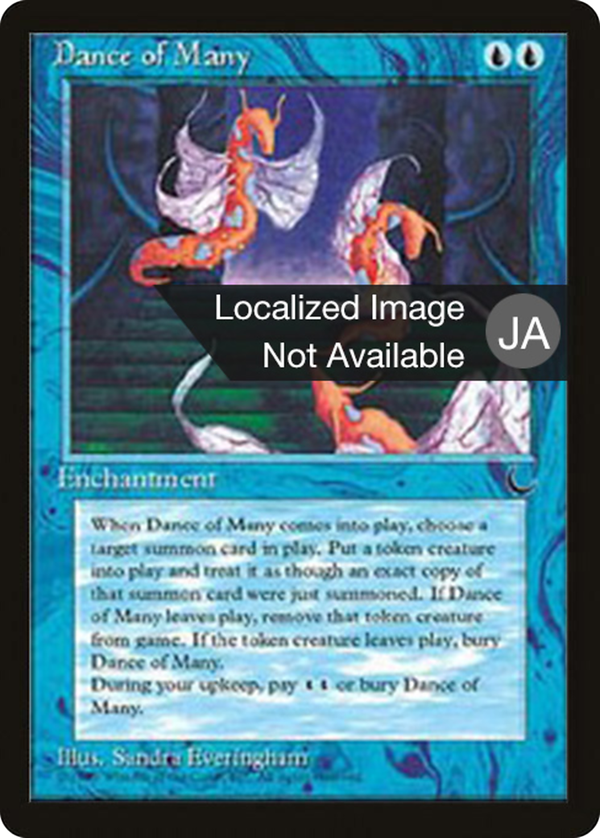
Rules text
.