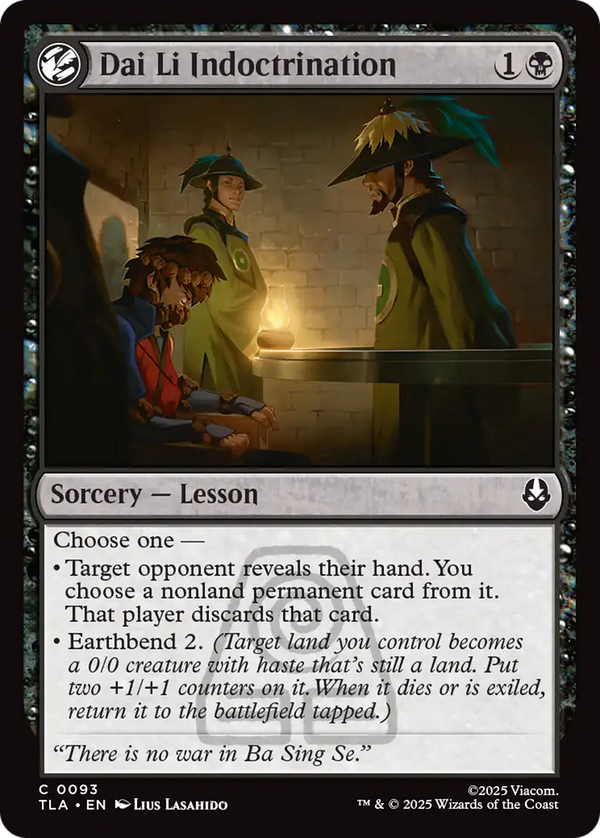
Dai Li Indoctrination


The two modes here pull in opposite tactical directions, and that tension is the whole design. Choose interrogation and you get targeted discard at the caster's discretion: reveal, you pick, the best nonland permanent leaves the hand. That is the classic proactive-disruption line, spending your turn to blunt theirs. Choose earthbend and the card ignores the opponent entirely, animating one of your lands into a hasty attacker that swings the turn it arrives, backed by a recursion clause that returns the land tapped if the creature dies or is exiled. That narrow trigger is the part worth reading carefully: bouncing the creature to hand or shuffling it into the library gives you nothing back, so the land is only insured against the two most common ways it goes away, not every way. Within that limit the recursion is still what elevates the manland side above a desperate topdeck, since combat and most removal leave you with the land intact. The larger point is that the two halves want different decks. The discard mode is the tool of the controlling deck grinding for parity; the earthbend mode is the aggressor's play, extra reach out of the manabase when a game stalls. Folding both onto one two-mana sorcery means the card reads its own game state at the moment of casting: are you ahead and pressing, or behind and stripping the answer that beats you. Modal cards live or die on whether both options ever feel live, and this one keeps both relevant deep into a game.