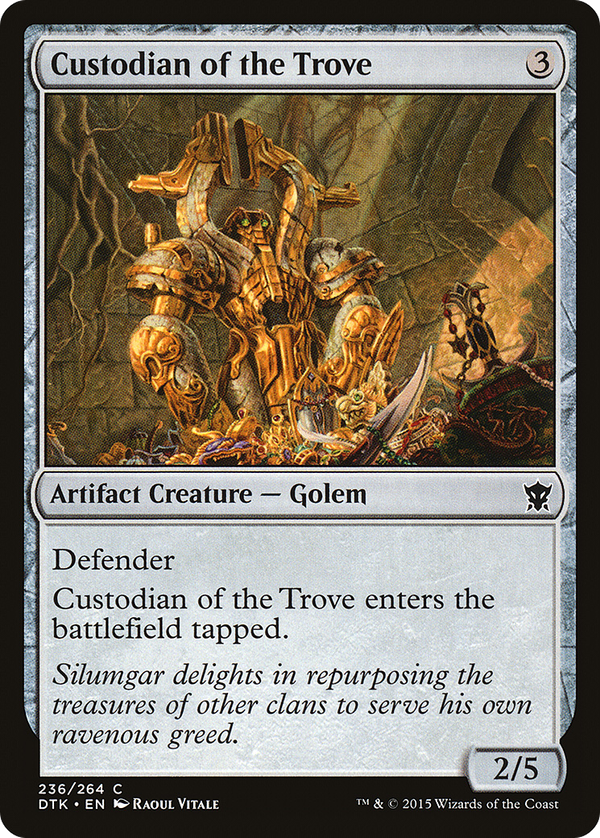
Custodian of the Trove

The toughness is the whole transaction here: a 2/5 body parks a five-point wall in front of small attackers, and nothing that costs two or three power can profitably trade into it. What pays for that durability is the enters-tapped clause, which is harsher than it looks on a defensive creature. A wall earns its keep by absorbing the swing the turn it lands; arriving tapped means it spends its first turn on the battlefield unable to block, so the aggression it was cast to answer gets one free hit in before the roadblock comes online. There is no engine under the stone: no card draw, no activated ability, no eventual pivot from blocker to clock. The defender keyword and the cheap cost place it at the bottom rung of the common-rarity wall lineage, a class of creature built to soak early pressure and buy a slower deck the turns it needs. Walls of this kind live entirely on the decks around them; the card holds a line, asks for nothing in return, and contributes nothing past that line. That is the full extent of what it was designed to do, and the tapped-entry tax means it does even that job a beat slower than its more polished cousins in the same archetype.