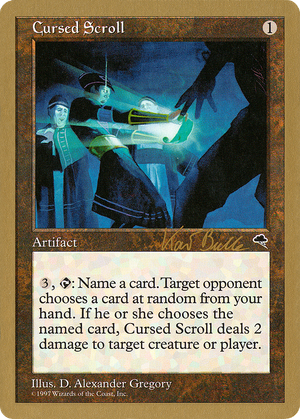
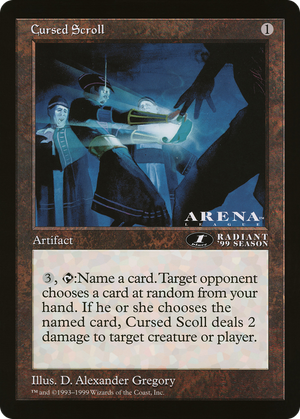
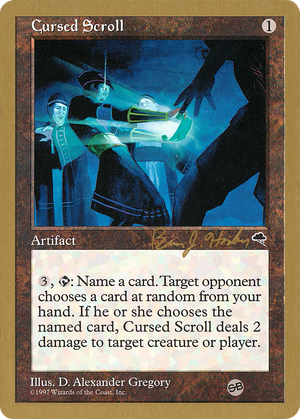
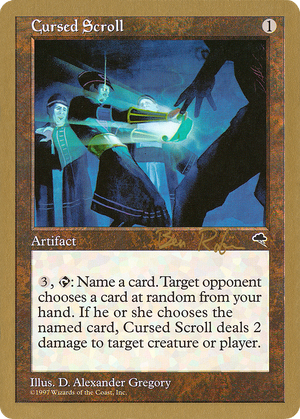
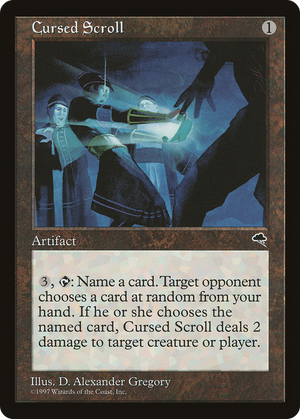
Cursed Scroll

The randomness in the activation is not a downside the deck tolerates: it is the entire reason the card exists. Naming a card and revealing one at random from your hand sounds like a coin flip, but the probability collapses to certainty the moment you are holding exactly one card. Name it, reveal it, ping for 2. That single-card threshold is the structural pivot the whole design turns on. With a full grip the activation is a gamble; with an empty hand there is nothing to reveal and the artifact sits inert; only at the bottom of your resources does it become a reliable, inexhaustible source of reach. Wizards built an engine that runs in reverse: dead weight while you are flush, a closing clock once a fast deck has dumped its hand onto the board. That inversion (strongest when you have almost nothing left) handed pure aggression the late-game payoff it usually lacks, turning a near-empty hand from a liability into a finisher. The  activation cost is the rate-keeper that stops it from being oppressive, but the artifact shrugs off creature removal entirely and never runs out of ammunition. It rewarded the kind of deck that wins or loses on resource depletion, and that is the precise reason it kept finding homes long after its original printing: a one-mana artifact that asks you to spend your hand and then makes that emptiness lethal.
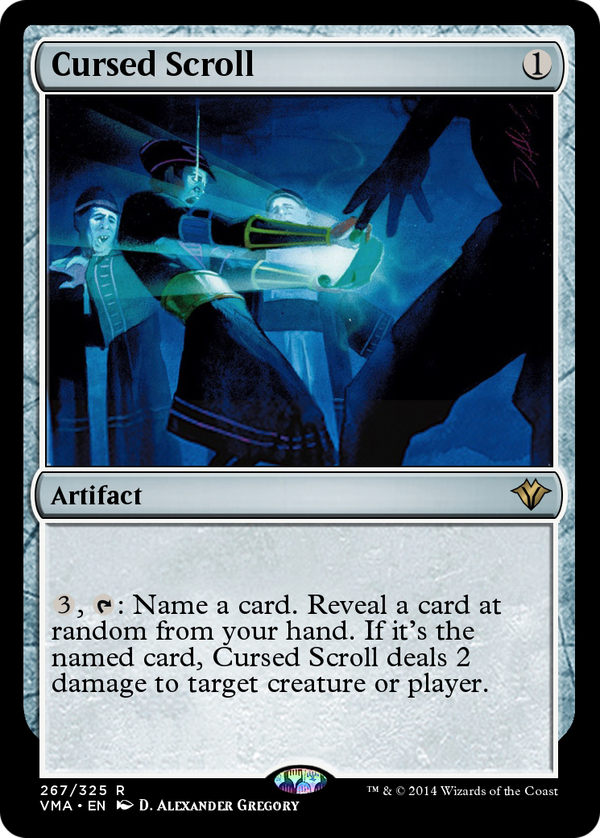
Rules text
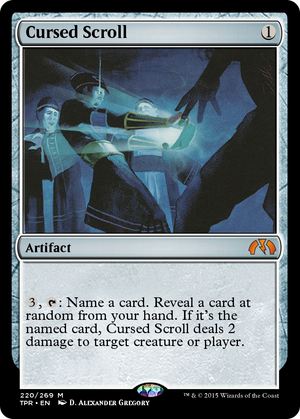
,  : Choose a card name, then reveal a card at random from your hand. If that card has the chosen name, this artifact deals 2 damage to any target.
Format Status
More formatsFewer formats
Other printings
- Tempest Remastered#220
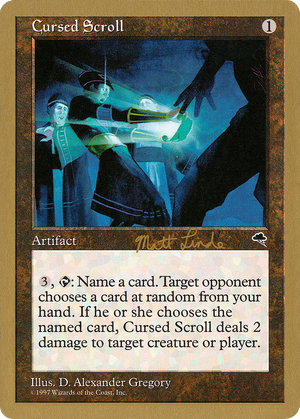
- World Championship Decks 1999#ml281
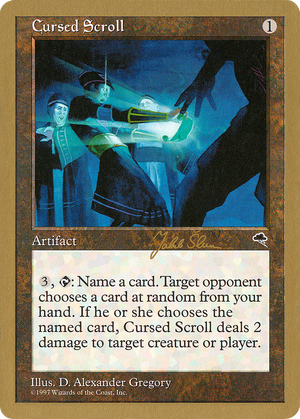
- World Championship Decks 1999#js281
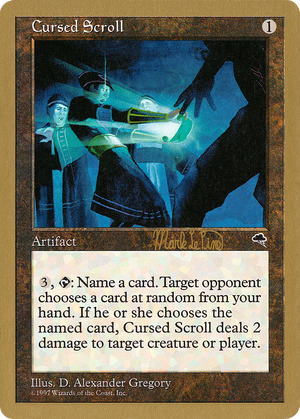
- World Championship Decks 1999#mlp281
- World Championship Decks 1999#kb281
- Oversized League Prizes#79
- World Championship Decks 1998#bh281sb
- World Championship Decks 1998#br281