Cunning Maneuver


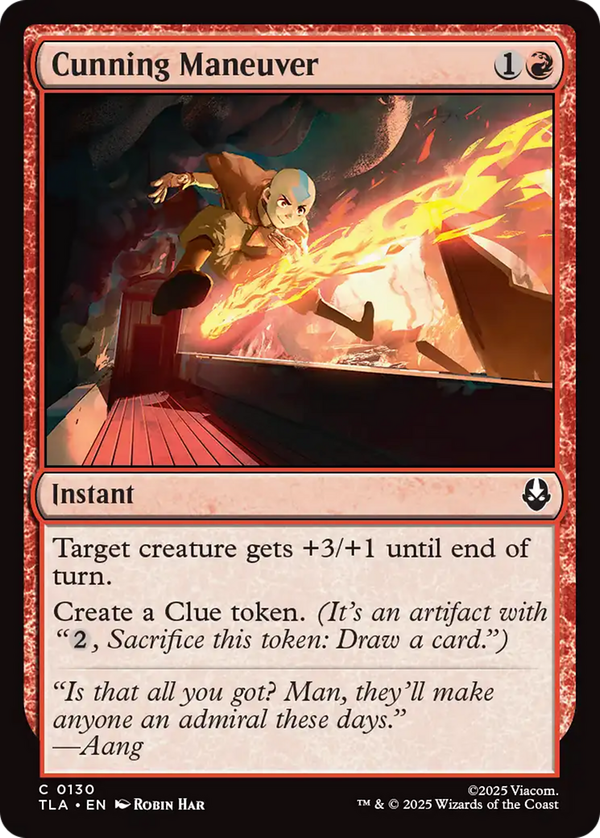
Combat tricks live and die by the tempo they win, and the oldest knock against them is card disadvantage: you spend a card to change one attack, and if the trade doesn't materialize you're simply down. The +3/+1 half here is an ordinary blowout, the kind of asymmetric buff that wins a bad block or pushes lethal through a gummed-up board. The Clue is what changes the math. Stapling a delayed cantrip to the pump refuses the usual one-for-one exchange: once the spell resolves, the artifact stays behind to replace itself later, cashed on your own schedule for two mana when you have the float. That converts a resource that normally rots in hand after combat into something closer to break-even. The catch is that the Clue only exists if the spell resolves at all: point the pump at a creature, and if your opponent removes that creature in response, the target vanishes, the spell fizzles for lack of a legal target, and you get neither the buff nor the token. So the insurance covers variance in combat, not variance in the stack. The trade-off is deliberate friction. You pay full price for the pump now and the card back separately, so it never draws you toward a swingy free ride the way a straight two-for-one trick would. It reflects a broader shift in how aggressive cards are costed: rather than inflate the raw stat line, give the effect an escape hatch against the turns the plan stalls.
Rules text
 , Sacrifice this token: Draw a card.")