Crystal Seer


The library-manipulation half was the entire point in its era: a Vedalken Wizard that smooths your next four draws on arrival, then offers to do it again. The reusability is what the bounce ability is for. Paying five to return the creature to hand resets the enters-the-battlefield trigger, turning a one-shot top-of-deck arrangement into a repeatable engine for any deck that wanted to stack lands and spells in a deliberate order, or to set up cards that care about library order. The cost structure tells you exactly how the design was balanced: the rearrange itself is free on the body, but the loop is gated behind a steep recurring tax, so you only buy a fresh look when smoothing the next few turns is worth more than developing the board. The 2/2 body for that mana is not the draw and was never meant to be; this is a value piece for a slower, controlling shell, the kind of creature that wants to outlast the game rather than win combat. The self-bounce clause exists less for tempo than to re-trigger the useful half, a "blink yourself by returning to hand" trick that recurs across early designs whose enters-the-battlefield effect was worth more than their stat line. The looking-without-drawing distinction matters too: it fixes draws without spending cards, which is the quiet thing this kind of effect always traded its rate for.
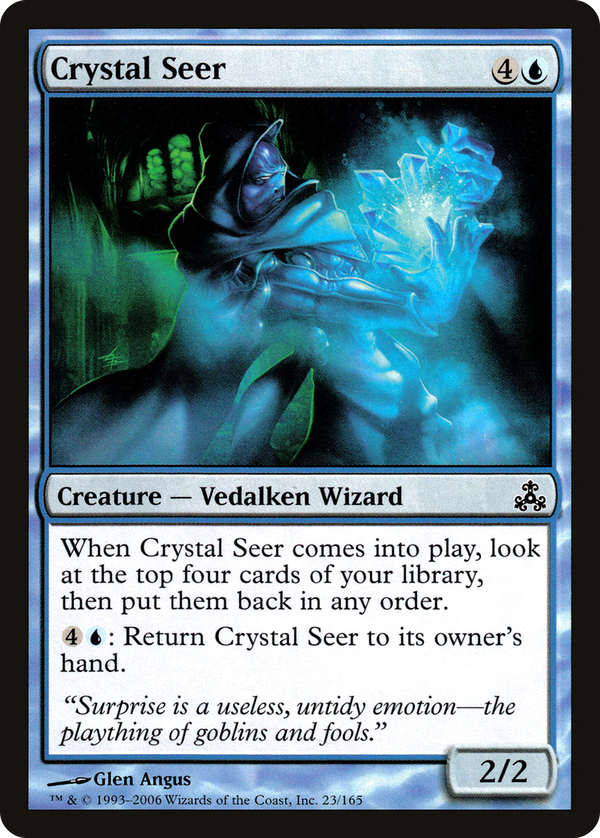
Rules text
: Return this creature to its owner's hand.