Crystal Ball

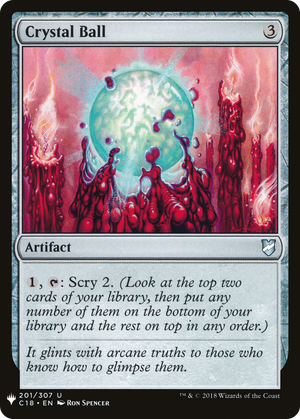
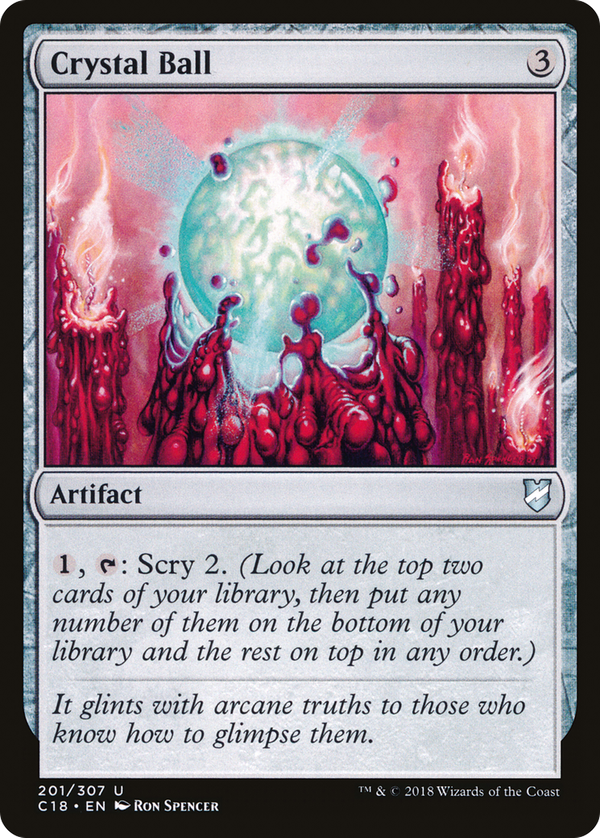
Before reusable filtering became a fixture, this kind of selection came one spell at a time: a Preordain here, an Opt there, each a single-use peek you bought and discarded. The math is what defines the artifact answer. One mana per activation buys a look at the top two cards, full control over order and disposal, every turn you can spare the mana. That converts a single permanent into a slow but relentless deck-smoothing engine, and because nothing taps your hand to power it, you are spending mana rather than cards to turn your worst future draws into your best ones. The cost structure carries the whole design logic: three to deploy, one to fire, repeatable without ceiling. Since it is not a creature waiting out summoning sickness, you can fire it the turn it resolves if you have the mana to spare; it is online the moment it lands. That trade rewards decks with a defined top end and a reliable mana surplus, and it punishes nothing except a clock fast enough to make a per-turn mana investment in filtering a luxury you cannot afford. The question underneath is how much variance a player should be allowed to smooth over the long game when each smoothing costs real resources, and the answer this design lands on (a steady drip rather than a burst) is what has kept it sane in the years since repeatable scry became standard equipment for control and ramp.
Rules text
 ,
,  : Scry 2. (Look at the top two cards of your library, then put any number of them on the bottom and the rest on top in any order.)