Court of Cunning


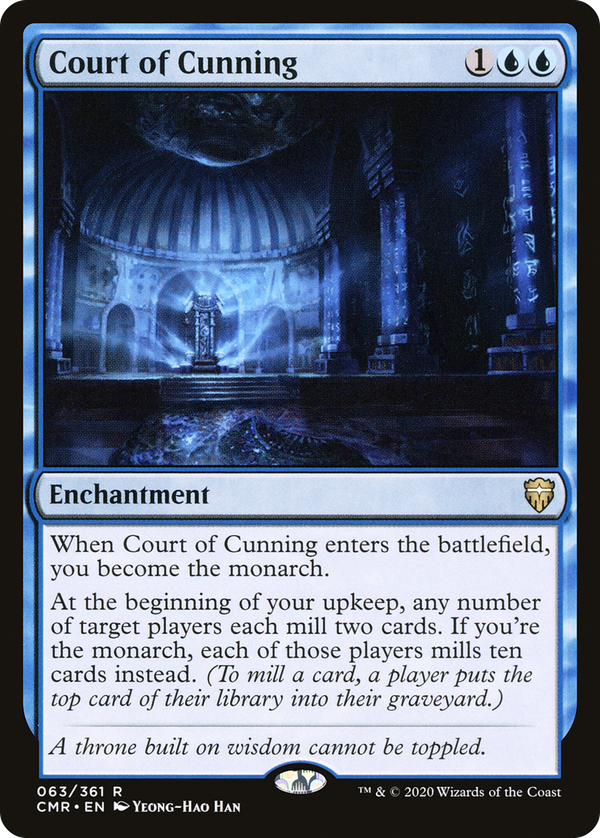
The gap between two cards and ten cards is the whole design. While you hold the crown, the upkeep trigger stops being a decorative chip and becomes a table-wide library assault: every player you target mills ten instead of two, so pointing it at three opponents grinds thirty cards off the top in a single turn. But the crown is contestable by definition. The monarchy changes hands whenever someone deals combat damage to you, which means this rewards a board position you have to actively defend rather than a value engine that hums along regardless of what happens around it. Keep the throne and the mill compounds toward decking multiple opponents at once; lose it and you are back to the toothless two-card version, still online but no longer a clock. That tension is the load-bearing element. Because the payoff is tied to a crown anyone can take by attacking you, the enchantment quietly makes you the table's target: every opponent has a mechanical reason to swing at your life total, so the ten-card mode buys its power by painting a bullseye on the pilot. The card asks you to build a game state that protects the monarchy (a defensive board, evasive threats, a life total you are willing to expose) and pays that investment back in a mill rate that no other enchantment at this cost reaches while spreading across the whole table at once.