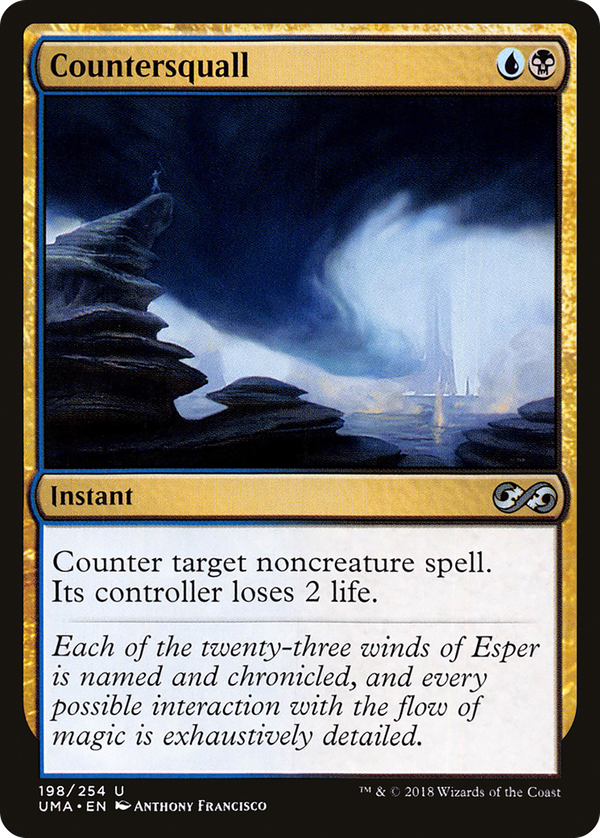
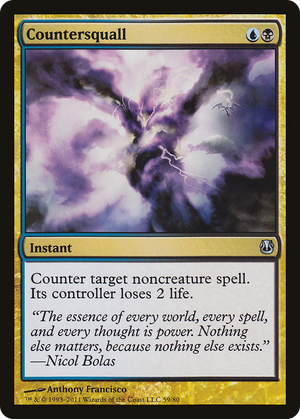
Countersquall


Negate with teeth. The trade-off in dedicated counterspells has always been about scope: hard counters like Counterspell ask nothing extra but demand double-colored mana, while cheaper or narrower answers concede something to control the spell. This sits at the narrow-but-punishing end, refusing to touch creatures in exchange for stapling a two-life loss onto every counter it resolves. That drain reframes what the card is doing. A standard counter is a purely defensive transaction: you spend two mana to deny your opponent two-or-more mana, and the board stays where it was. Adding the life loss turns each interaction into incremental progress on a second axis, which is exactly how a tempo-control deck wants to win: a counter that also closes the game two points at a time. The clock matters most when the same deck is leaning on small recurring drains elsewhere, where two life per countered burn spell, planeswalker, or artifact engine compounds rather than evaporates. The cost is the creature blind spot, a real concession against any opponent who wins through bodies, but it is the honest price for a counter that bleeds. Note the precise wording: the controller loses life, not takes damage, so it slips past prevention effects and any creature that would otherwise redirect or soak a damage source. It is the uncommon permission spell that contributes to the kill rather than merely delaying it.