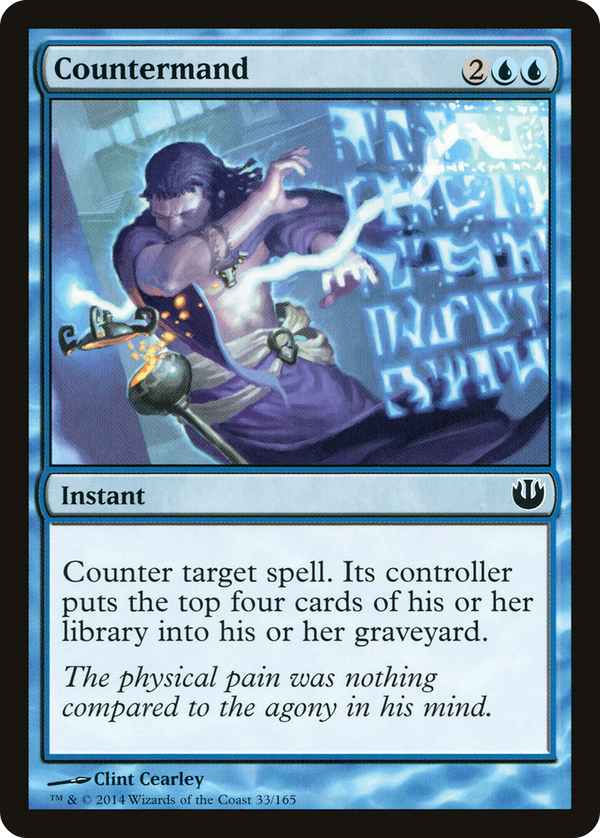
Countermand


A generic mana over the floor for an unconditional counter, and that surcharge buys a milling rider stapled to a hard counter. As pure interaction the rate is behind the curve: Cancel counters anything for the same blue commitment a generic mana cheaper, and Dissolve trades the mill for a scry that actually helps a control deck. The four milled cards, not the counter, are what the extra mana pays for, which tells you this was never built for a deck looking to trade one-for-one. It belongs to the mill archetype, where stopping a spell and burying four cards in the same instant collapses two strategic axes into one: you protect yourself from whatever they cast while advancing your actual win condition. That dual purpose is also its tax, since a mill deck that wants countermagic and a control deck that wants mill are both narrow propositions; you have to want both at once or the card is simply overcosted. The wrinkle is where the four cards go. The effect mills the countered spell's controller, not a player of your choosing, so by default it grinds whoever cast the spell you stopped. The same wording opens a self-targeting line, though: counter your own spell and you mill yourself, which a graveyard-fueled deck can convert into deliberate fuel rather than collateral. For a strategy long starved of instant-speed interaction that still moves its own plan forward, the pitch is a single card that refuses to separate defense from offense.