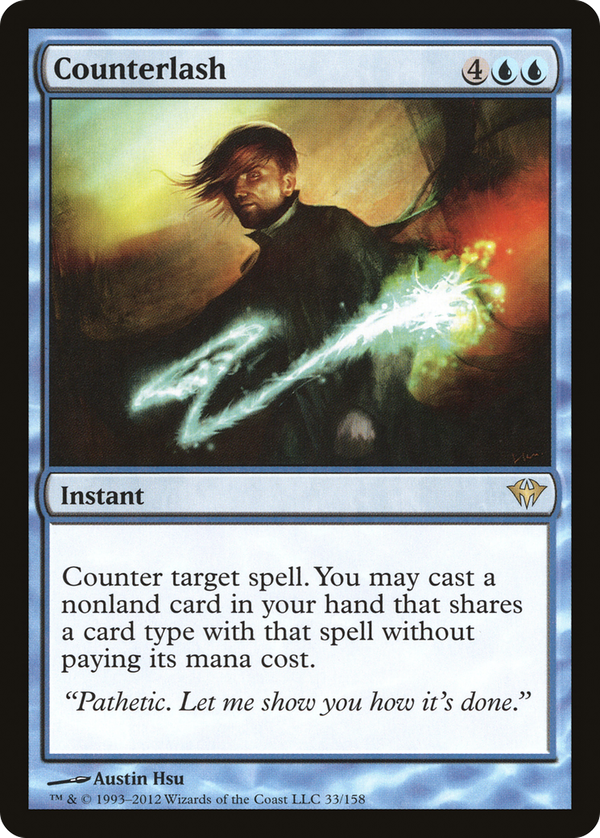
Counterlash


Six mana for a counterspell is a steep ask, and the free cast tacked onto it only pays the difference when your hand happens to hold a same-type haymaker. That binding is what turns the card into a puzzle rather than a blank advantage: counter an instant, you cast an instant; counter a creature, you drop a creature without paying. The condition pulls the deckbuilder in two directions at once. You want a list overloaded with a single card type to guarantee the payoff fires, yet the spell you most want to counter rarely matches the spell you most want to cast for free. Counterspells with a kicker usually hand you something type-agnostic (a card, a life swing, a body); this one withholds the bonus unless the matchup and your hand both cooperate, which is a far harder contract to satisfy. The fantasy is countering an opposing finisher and slamming your own in the same breath, a swing that ends games on the spot. The reality is a high-variance answer that asks you to bend the whole list around one conditional reward and hope the type lines up. It is interaction for a deckbuilder willing to commit to a single card type as the spine of the deck, not a clean piece of countermagic you splash into anything.