Corpse Dance


The defining tension here is that the reanimation is rented, not bought. Most graveyard recursion of this era either handed you the creature outright or demanded a steep payment; this returns it at instant speed with haste, then claws it back into exile once the turn closes. The body is yours for exactly one turn, which reframes the card as a combat trick and a sacrifice engine rather than a value play: you flash back a creature to swing once, to block once, or to harvest a death trigger before the exile clause cleans it up. Buyback is what turns that rental into a subscription. Pay the extra cost and the spell returns to hand, so a single cast becomes a repeatable loop limited only by mana and whatever sits on top of your graveyard. The genuine constraint is that the card offers no choice: it returns the top creature card, full stop, no selection and no target. The deck has to be built to control graveyard order or accept whatever surfaces, and that single restriction is the lever holding the rate in check. It is also what drew dedicated combo shells that could guarantee the right card on top, turning a self-correcting limitation into a non-issue. The instant-speed window matters as much as the recursion itself; it lets the effect ambush a combat step or respond to a removal spell in ways a sorcery-speed reanimator never could.
Rules text
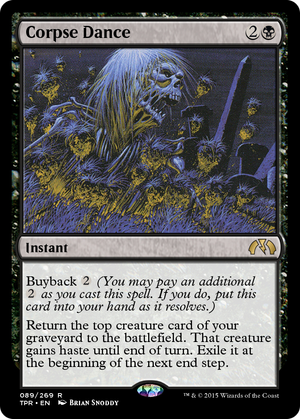
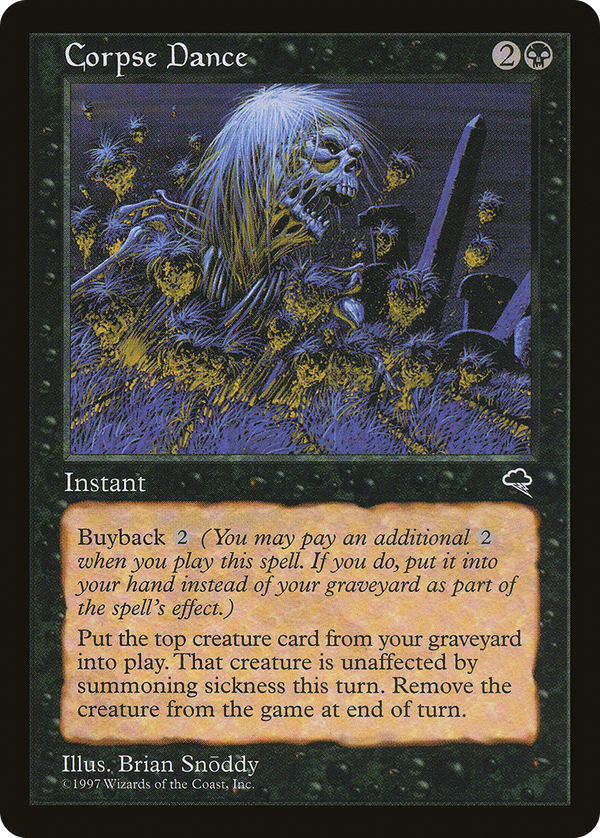
(You may pay an additional as you cast this spell. If you do, put this card into your hand as it resolves.)
Return the top creature card of your graveyard to the battlefield. That creature gains haste until end of turn. Exile it at the beginning of the next end step.